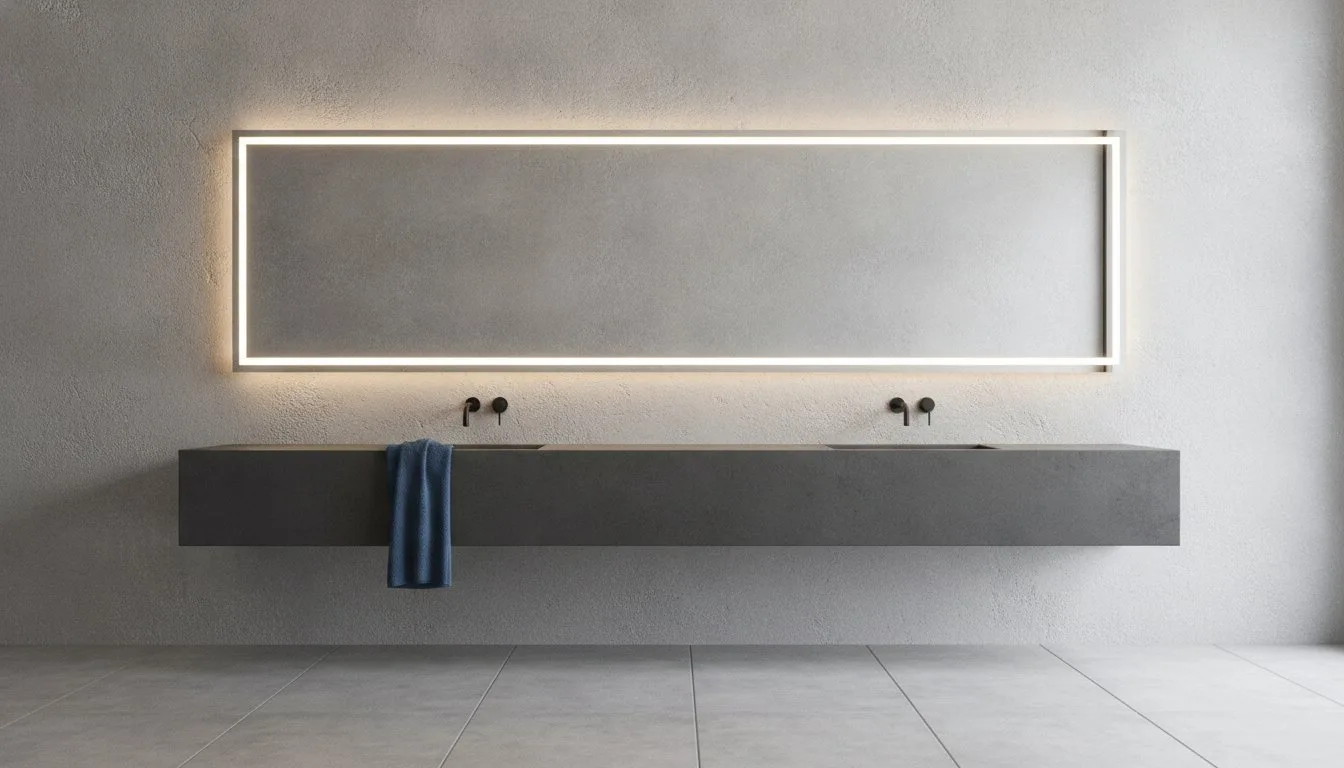
Could a miscalculated IP rating or a slight color temperature shift turn a flagship suite into a maintenance nightmare? Most design professionals agree that meeting stringent hotel bathroom lighted mirror requirements is one of the most technical challenges in a hospitality rollout. You’re constantly balancing the aesthetic vision of a luxury brand with the gritty realities of moisture resistance and electrical code compliance. It’s a high-stakes environment where even a minor oversight in dimming protocols can lead to costly post-installation failures.
We’ve developed this 2026 specification guide to help you navigate these complexities with confidence, ensuring every fixture performs flawlessly from opening night through years of high-occupancy use. By understanding the intersection of safety standards and visual performance, you can protect your project from common pitfalls while delivering a superior guest experience. We’ll examine critical visual performance metrics like CRI and R9 values, safety certifications such as UL 962, and the latest trends in custom fabrication that simplify ADA compliance. This technical roadmap provides the clarity needed to specify high-performance LED mirrors that satisfy both the creative designer and the practical contractor.
Key Takeaways
- Specify CRI 90+ and R9 standards to ensure skin tone accuracy and color consistency across luxury guest suites.
- Navigate hotel bathroom lighted mirror requirements for 2026 by aligning with UL/ETL certifications and ADA mounting heights for total risk mitigation.
- Integrate advanced driver protocols with building management systems to provide guests with intuitive dimming and smart-room controls.
- Incorporate decorative etched glass into bespoke mirror layouts to reinforce brand identity through subtle, high-end logo integration.
- Optimize your project lifecycle by managing manufacturing lead times and RFP documentation for large-scale hospitality rollouts.
Visual Performance Standards: CRI, CCT, and Lumens
Achieving superior visual performance is a cornerstone of modern hotel bathroom lighted mirror requirements, as lighting quality directly impacts guest satisfaction and brand perception. It’s not just about brightness; it’s about the precision of color and the warmth of the environment. We don’t just provide hardware; we offer a technical framework that ensures every guest sees themselves in the best possible light.
Optimal CRI and CCT for Hospitality
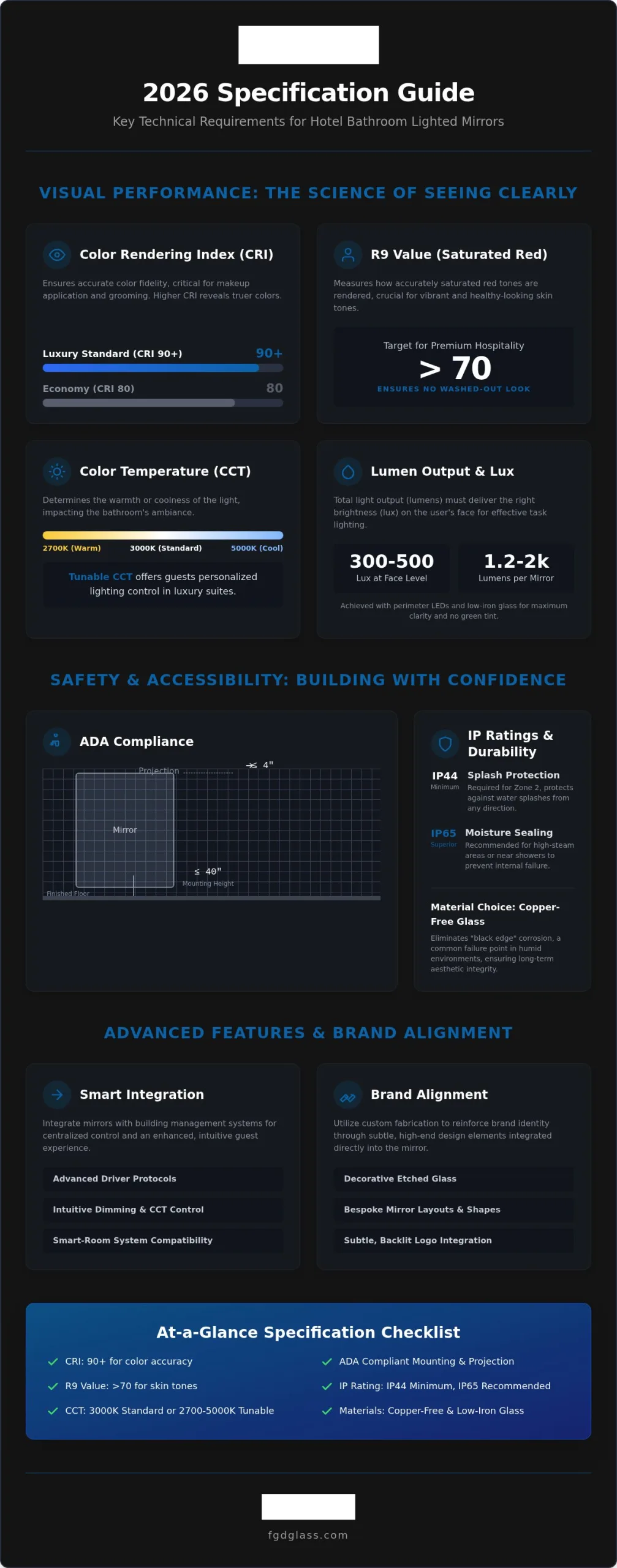
Luxury hospitality projects demand a Color Rendering Index (CRI) of 90 or higher to ensure guests see themselves accurately. This is especially critical for tasks like makeup application and grooming where color fidelity is paramount. While a CRI of 80 might suffice for economy properties, upscale brands now prioritize the R9 value, which measures saturated reds. An R9 value above 70 ensures healthy, natural skin tones that look vibrant rather than washed out. Correlated Color Temperature (CCT) has largely standardized at 3000K for guest bathrooms, providing a warm, residential-inspired glow. However, high-end suites are increasingly specifying tunable CCT ranges from 2700K to 5000K, giving guests agency over their environment.
In smaller bathroom footprints, the mirror often serves as the primary light source. Balancing this task-oriented illumination with the overall ambient mood requires sophisticated dimming capabilities. This integration allows the bathroom to transition from a bright, functional space in the morning to a soft, spa-like retreat in the evening. As a strategic ally in the design process, we ensure that these technical specs are met without compromising the aesthetic vision.
Lumen Output and Light Distribution
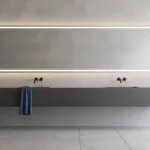
Effective task lighting requires careful calculation of lumen output to meet IES Lighting Handbook recommendations of 300 to 500 lux at face level. A single mirror should typically provide between 1,200 and 2,000 lumens to achieve this when combined with existing ceiling fixtures. Strategic LED placement is essential to eliminate the harsh shadows that often plague inferior backlit designs. By positioning light sources around the perimeter, we create a wrap-around effect that illuminates the face evenly. Glass clarity plays a silent but vital role here; using low-iron glass maximizes light transmission and prevents the green tint common in standard float glass from distorting the CCT. For 2026, leading specifications target a light uniformity ratio of 1:1.5 across the entire frosted surface to ensure a seamless, high-end glow without visible hot spots.
Safety and Accessibility: Compliance Codes for 2026
Specifying mirrors for hospitality isn’t just a design exercise; it’s a rigorous exercise in risk management. While visual performance creates the guest experience, compliance with safety codes ensures the longevity of the installation and protects the property owner from liability. Adhering to the latest hotel bathroom lighted mirror requirements means navigating a complex landscape of accessibility laws and electrical safety protocols. We view these regulations not as constraints, but as the foundation for a reliable, high-performing guest suite.
ADA Standards for Mirror Installation
Accessibility is a primary concern for any commercial guest room. The Americans with Disabilities Act (ADA) dictates specific mounting heights and projection limits to ensure universal usability. For instance, the bottom edge of the reflective surface shouldn’t be higher than 40 inches above the finished floor. Projection is equally vital; any fixture mounted between 27 and 80 inches from the floor must not protrude more than 4 inches into the walkway. This prevents the mirror from becoming a hazard for guests with visual impairments. We often recommend integrated touch sensors or infrared switches placed at an accessible height to ensure every guest can operate the lighting without difficulty, regardless of their physical capabilities.
Electrical Safety and Durability
Bathrooms are inherently high-humidity environments, making the Ingress Protection (IP) rating a critical specifier. An IP44 rating is typically the minimum requirement for mirrors located in Zone 2, providing protection against water splashes from any direction. For mirrors installed in high-steam areas or near walk-in showers, upgrading to an IP65 rating provides a superior seal against moisture ingress, preventing internal component failure. Beyond the enclosure, the glass itself must be durable. We specify copper-free glass to eliminate edge corrosion, a common failure point in humid climates that leads to unsightly “black edge” over time. This foresight protects the aesthetic integrity of the room for years after the project’s completion.
All electrical components must align with the National Electrical Code (NEC) to meet 2026 safety benchmarks for damp locations. This includes ensuring that the entire assembly, not just the driver, carries a UL or ETL listing for commercial use. Our team at FGD Glass Solutions leverages decades of expertise to help you navigate these codes, providing bespoke LED mirrors that meet every safety threshold without sacrificing your design intent. Shatter-resistant safety backing is another essential standard we implement, ensuring that even in the event of an accidental impact, the glass remains contained to prevent guest injury.
Advanced Functionality: Smart Tech and Longevity
Modern hospitality design has shifted from simple fixtures to integrated technology systems. As guest expectations evolve, hotel bathroom lighted mirror requirements now encompass sophisticated smart features that enhance both the user experience and the property’s operational efficiency. We focus on delivering solutions that don’t just look impressive on opening day but continue to function flawlessly through thousands of guest cycles. This long-term reliability is achieved through a combination of precision engineering and advanced control protocols that bridge the gap between high-level aesthetics and practical maintenance.
Integration with Smart Guest Room Systems
Seamless connectivity is a hallmark of the 2026 luxury suite. Specifying DALI (Digital Addressable Lighting Interface) or 0-10V dimming drivers allows the mirror to participate in centralized lighting scenes, automatically adjusting brightness based on the time of day or guest presence. This capability simplifies the guest experience by offering intuitive control through bedside panels or voice-activated systems. For high-end boutique brands, we often integrate Bluetooth-enabled audio or discreet digital clocks directly behind the glass surface. To ensure these features remain viable for the long haul, we prioritize component longevity. In 2026, high-performance commercial LEDs are engineered for a L70 lifespan of at least 50,000 hours, meaning they retain 70% of their original light output even after nearly six years of constant operation.
Moisture Management and Defogging
Nothing disrupts a luxury guest experience like a steamed-over mirror after a shower. Integrated defogger pads solve this issue by gently warming the glass surface to prevent condensation, providing immediate clarity for post-shower grooming. To mitigate energy waste, we recommend specifying auto-shutoff timers that deactivate the heating element after 30 or 60 minutes. This proactive approach to energy conservation aligns with modern sustainability benchmarks while protecting the internal electronics from prolonged heat exposure. We utilize specialized sealing techniques to enclose the LED drivers and wiring, creating a barrier against the corrosive effects of steam and humidity. This level of foresight reduces the risk of electrical shorts and extends the service life of the entire unit. By focusing on modular component design, we also ensure that drivers and LED strips can be replaced without removing the mirror from the wall, simplifying maintenance for hotel engineering teams and preventing the need for full fixture replacements.
Design Customization and Brand Alignment
Aesthetics represent the final, most visible layer of the specification process. While safety and electrical standards provide the foundation, customization is what aligns the fixture with the property’s unique brand narrative. Modern hotel bathroom lighted mirror requirements have evolved to include bespoke elements that transform a standard utility into a signature design feature. We work closely with design teams to ensure these artistic choices never compromise the technical integrity or the reflective quality of the glass. This collaborative approach allows us to bridge the gap between a creative vision and a high-performance physical result.
Branding Through Decorative Glass
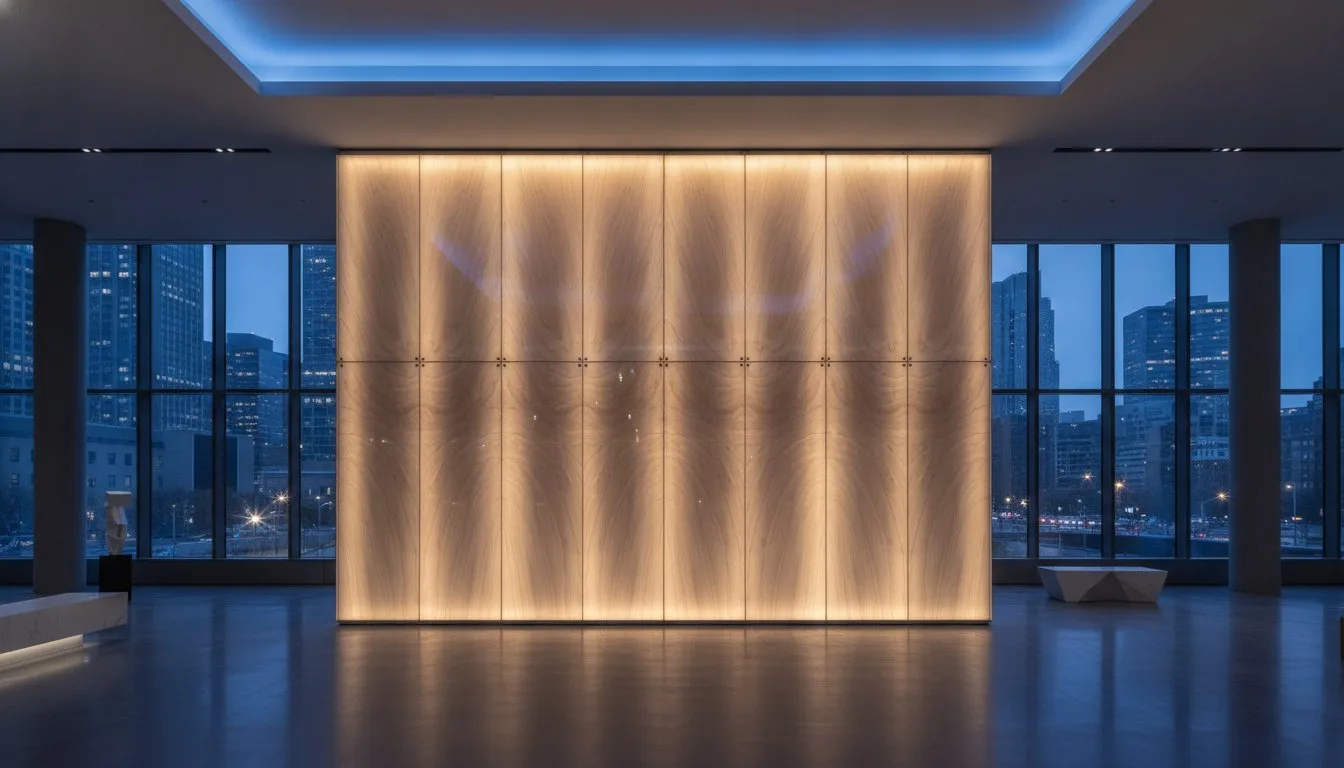
Integrating corporate identity into guest bathrooms requires a delicate touch. We utilize sandblasting and acid etching techniques to create Decorative Etched Glass logos and patterns directly on the mirror surface. By positioning LED arrays behind these etched sections, we produce a sophisticated “glow” effect that highlights the branding without creating glare or distracting the guest. This method ensures the brand remains present throughout the guest’s stay while maintaining a high-end, uncluttered aesthetic. It’s a strategic way to reinforce luxury positioning through subtle, tactile details that feel integrated rather than applied. For properties seeking to extend this illuminated branding approach beyond the bathroom, exploring LED illuminated signage glass offers a cohesive way to carry the same design language into lobbies and public spaces. This same commitment to integrated structural lighting is equally critical when specifying an illuminated reception desk design that sets the tone for the entire property from the moment guests arrive.
Holistic Glass Design Integration
A common pitfall in hospitality projects is treating the mirror as an isolated unit. For a cohesive guest experience, the mirror’s finish and glass type should coordinate with other architectural elements like Glass Shower Enclosures or glass barn doors. Using low-iron glass is essential for this level of integration. It provides superior color neutrality, ensuring that the light temperature and reflections remain consistent across every glass surface in the room. This level of coordination is detailed further in our Hospitality Design Material Specification guide, which serves as a roadmap for architects managing complex material palettes.
Beyond standard rectangular formats, we offer custom shapes like pill, arch, and organic silhouettes to fit unique boutique footprints. Framing also plays a critical role in brand alignment, whether you specify a minimalist frameless edge for a modern look or an inset decorative metal finish that matches the bathroom’s plumbing hardware. These choices allow for a seamless transition from the vanity to the surrounding architecture, creating a unified design language. If you’re ready to explore how custom fabrication can elevate your next project, contact our specialists for a design consultation.
Specification Framework for Large-Scale Projects
Managing large-scale hospitality rollouts requires a shift from selecting individual fixtures to developing a comprehensive project framework. When you’re dealing with hundreds of units across multiple properties, meeting hotel bathroom lighted mirror requirements depends heavily on the robustness of your RFP documentation. We position ourselves as a strategic ally during this phase, helping architects and contractors refine their technical specifications to ensure consistency and eliminate ambiguity before the first order is placed. It’s a proactive approach that mitigates the risk of receiving non-compliant products that could halt a national rollout or lead to costly site-level modifications.
The Procurement Lifecycle
Successful execution begins with identifying key milestones from the initial concept design to final site delivery. One of the most common pitfalls in glass procurement is failing to account for the manufacturing lead times required for bespoke fabrication. For high-volume orders, you must verify a fabricator’s capacity to maintain color consistency through LED binning, ensuring that every room across a 500-key property shares the exact same light output and temperature. We recommend approving submittals at least eight weeks before the installation date to allow for rigorous quality control and logistical coordination. This foresight prevents the typical stresses associated with large-scale construction by ensuring the supply chain remains ahead of the project timeline.
Quality Assurance and Site Readiness
The transition from factory to site is where many projects encounter friction. We help streamline this process by standardizing mounting hardware across different room types, which simplifies the workload for installation crews and reduces the potential for error. Site readiness is equally vital; all pre-installation electrical requirements for hardwired mirrors must be clearly communicated to the electrical contractor well in advance. This includes specifying junction box locations that align perfectly with the mirror’s driver housing to maintain a clean, flush-to-wall finish. If the rough-in doesn’t match the fixture’s internal layout, the resulting delays can impact the entire floor’s handover schedule.
A final inspection checklist is essential for a successful architectural glass handover. This list should verify that every unit meets the agreed-upon visual performance standards and safety certifications discussed earlier in this guide. By maintaining end-to-end involvement, we ensure that the finished result reflects the original design intent without compromise. Our focus remains on preventing industry headaches through expert oversight, providing a turn-key solution that bridges the gap between high-level aesthetics and the logistical realities of commercial construction.
Elevating Hospitality Standards through Technical Precision
Mastering the 2026 landscape of guest suite design requires more than just an eye for aesthetics; it demands a deep commitment to technical performance and safety. From ensuring CRI 90+ color accuracy to navigating complex ADA mounting codes, every detail contributes to a seamless guest experience. By integrating advanced smart features and establishing a structured procurement framework, you can protect your project from common logistical failures and maintenance headaches. These standards aren’t just checkboxes; they’re the foundation of a high-performance luxury environment.
Success in large-scale hospitality rollouts depends on early collaboration and expert oversight. Navigating the full spectrum of hotel bathroom lighted mirror requirements is simpler when you have a strategic ally to manage the complexities of custom fabrication and site readiness. We provide expert guidance from the initial concept through the final installation, delivering custom-engineered LED mirrors that exceed modern commercial benchmarks. We’re ready to help you realize your vision with confidence and efficiency. Partner with FGD for your hospitality mirror specifications and ensure your next project performs flawlessly from day one.
Frequently Asked Questions
What is the minimum CRI required for hotel bathroom mirrors?
Luxury and boutique hospitality brands require a minimum CRI of 90 to ensure accurate color rendering for guest grooming. While economy properties may accept a CRI of 80, meeting upscale hotel bathroom lighted mirror requirements involves prioritizing the R9 value for natural skin tones. This technical precision ensures that the lighting remains flattering and functional throughout the project’s lifecycle.
Are LED mirrors required to be hardwired in commercial hotels?
Yes, LED mirrors in commercial hotels are almost exclusively hardwired to meet 2026 safety standards and maintain a clean architectural finish. Hardwiring ensures the fixture is controlled via the room’s central lighting system and eliminates the risk of exposed cords. This approach aligns with National Electrical Code (NEC) requirements for damp locations and simplifies the installation process for contractors on-site.
How do ADA requirements affect the placement of lighted mirrors?
ADA compliance requires the bottom edge of the reflective surface to be no higher than 40 inches above the finished floor. Additionally, any mirror projecting into a walkway between 27 and 80 inches from the ground must not protrude more than 4 inches. These hotel bathroom lighted mirror requirements ensure that fixtures remain accessible and safe for guests with visual or mobility impairments.
What is the difference between front-lit and backlit hotel mirrors?
Front-lit mirrors utilize frosted glass cutouts to provide direct task lighting for makeup and shaving, while backlit mirrors project light against the wall to create a soft halo effect. Backlit designs are often chosen for ambient mood lighting, but they usually require supplemental ceiling fixtures to meet task-level illumination standards. Choosing between them depends on your property’s total bathroom lighting plan.
Can I include custom branding on a lighted mirror?
You can absolutely include custom branding by utilizing Decorative Etched Glass techniques like sandblasting or acid etching. We can incorporate logos or patterns directly into the mirror’s surface and backlight them for a sophisticated, subtle glow. This customization reinforces brand identity without compromising the functional reflection area needed by the guest, creating a signature design feature for the suite.
What are the IP rating requirements for mirrors in hotel spas?
Hotel spas and high-humidity zones require mirrors with a minimum rating of IP44 to protect against water splashes from any direction. For mirrors located directly near steam rooms or walk-in showers, we recommend an IP65 rating to provide a superior seal against moisture ingress. This level of protection prevents internal corrosion and electrical failure in saturated, high-occupancy environments.
How long do the LEDs in a commercial-grade mirror typically last?
Commercial-grade LEDs are engineered for a L70 lifespan of 50,000 hours, meaning they retain 70% of their original brightness after nearly six years of continuous use. In a typical hotel environment where mirrors aren’t on 24/7, these fixtures can last well over a decade. We prioritize high-quality drivers to ensure the electronics match the long-term durability of the LED strips.
Do hotel bathroom mirrors require a dedicated circuit?
A dedicated circuit isn’t strictly required by code but is often recommended when mirrors include high-draw features like anti-fog pads. These defoggers add between 40 and 80 watts to the fixture’s total power draw. Ensuring the bathroom’s electrical layout can handle the combined load of the mirror and general lighting prevents tripped breakers and reduces strain on the building’s infrastructure.