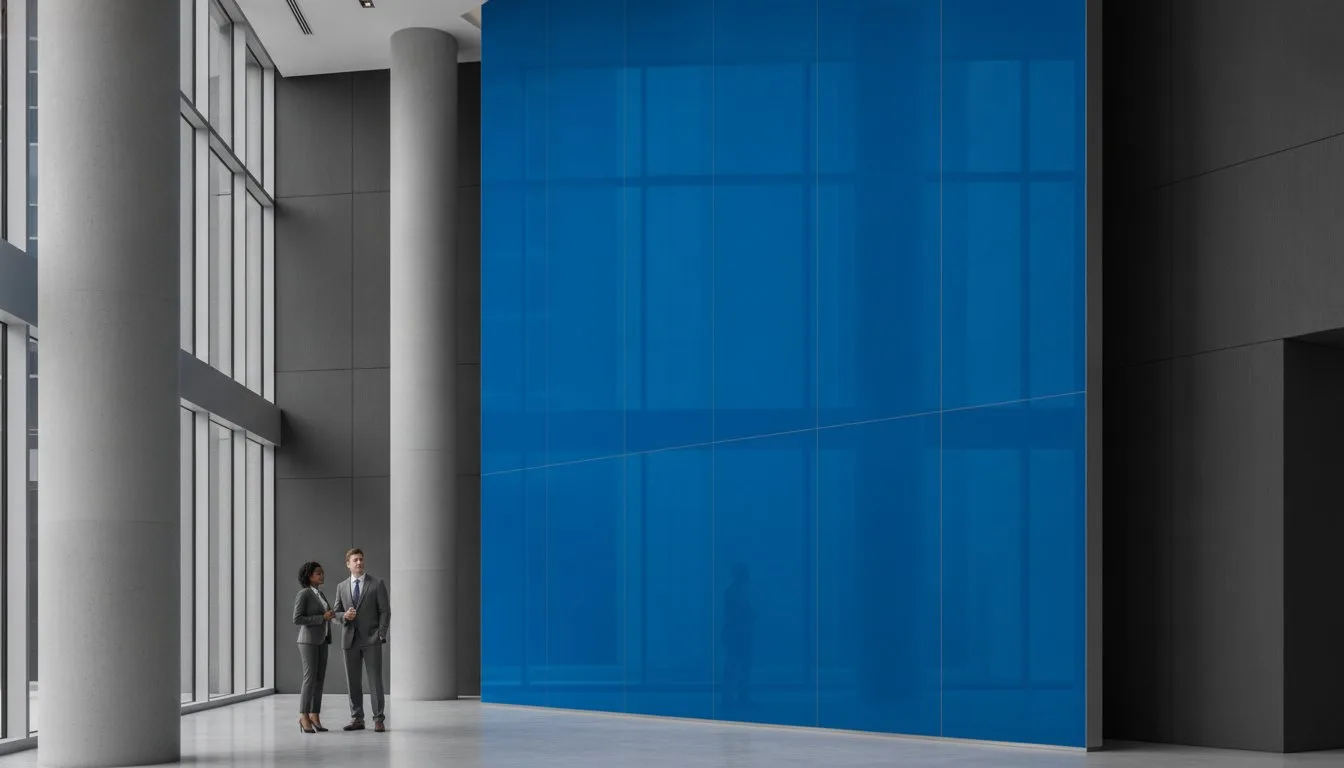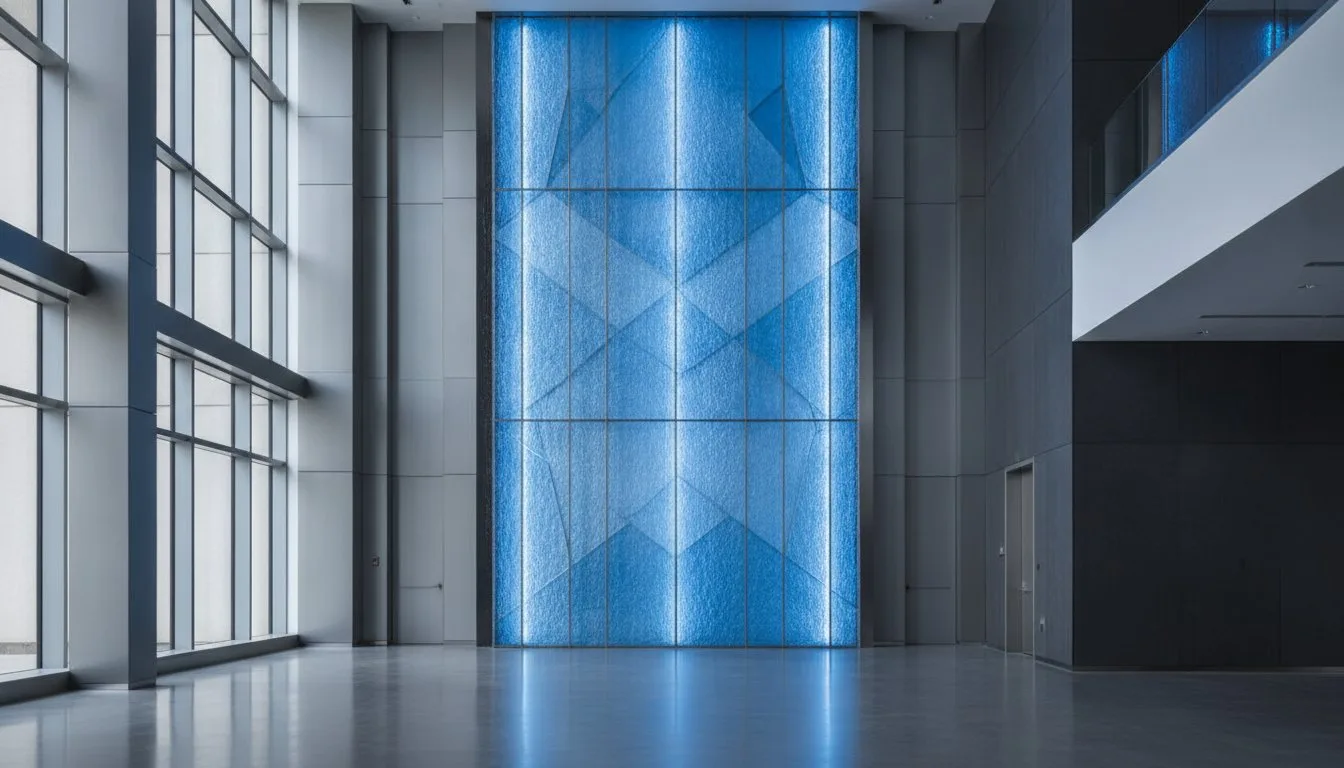
The lightweight convenience of resin might be the most expensive choice you make for a high-traffic lobby. When you’re evaluating Lumicor resin panels vs laminated glass for a 2026 project, the initial weight savings often mask long-term risks like surface degradation and strict fire code compliance. We recognize that as a specifier, you’re balancing a bold design vision with the practical realities of structural loads and maintenance budgets. You need a feature wall that maintains its clarity and impact for a decade or more, not one that requires replacement after a few years of heavy use.
This guide provides a methodical technical comparison between high-performance resin and architectural laminated glass. We’ll explore how material choice impacts structural requirements, fire safety certifications, and surface longevity in demanding commercial environments. Our goal is to provide the data-backed confidence you need to select a material that secures both your aesthetic goals and your client’s long-term investment. You’ll gain a clear understanding of the ROI for each option, ensuring your next project stands as a testament to both design and durability.
Key Takeaways
- Evaluate the long-term ROI of scratch-resistant laminated glass compared to the surface sensitivity of thermoplastic resin in high-traffic commercial corridors.
- Understand the critical distinctions between Class A resin fire ratings and the non-combustible standards required for high-occupancy lobbies and exit paths.
- Compare the optical performance of low-iron glass against the inherent tint of polymers to ensure your design maintains its intended color and clarity.
- Review the technical criteria for specifying Lumicor resin panels vs laminated glass, focusing on weight constraints versus the need for permanent, scrubbable surfaces.
- Learn how to mitigate project risk by selecting materials that withstand aggressive commercial cleaning agents without losing their aesthetic finish.
Understanding the Fundamentals: Resin Panels vs. Laminated Glass
The design landscape of 2026 reflects a decisive move toward permanent, high-performance materials that reduce lifecycle costs and environmental impact. When evaluating Lumicor resin panels vs laminated glass, the choice often hinges on the specific demands of the architectural environment. Resin provides a lightweight, versatile alternative for non-contact areas, while glass serves as the definitive standard for high-traffic zones where surface integrity is non-negotiable. Understanding these base materials is the first step in mitigating project risk and ensuring the final installation aligns with the client’s long-term vision.
The Composition of Decorative Resin
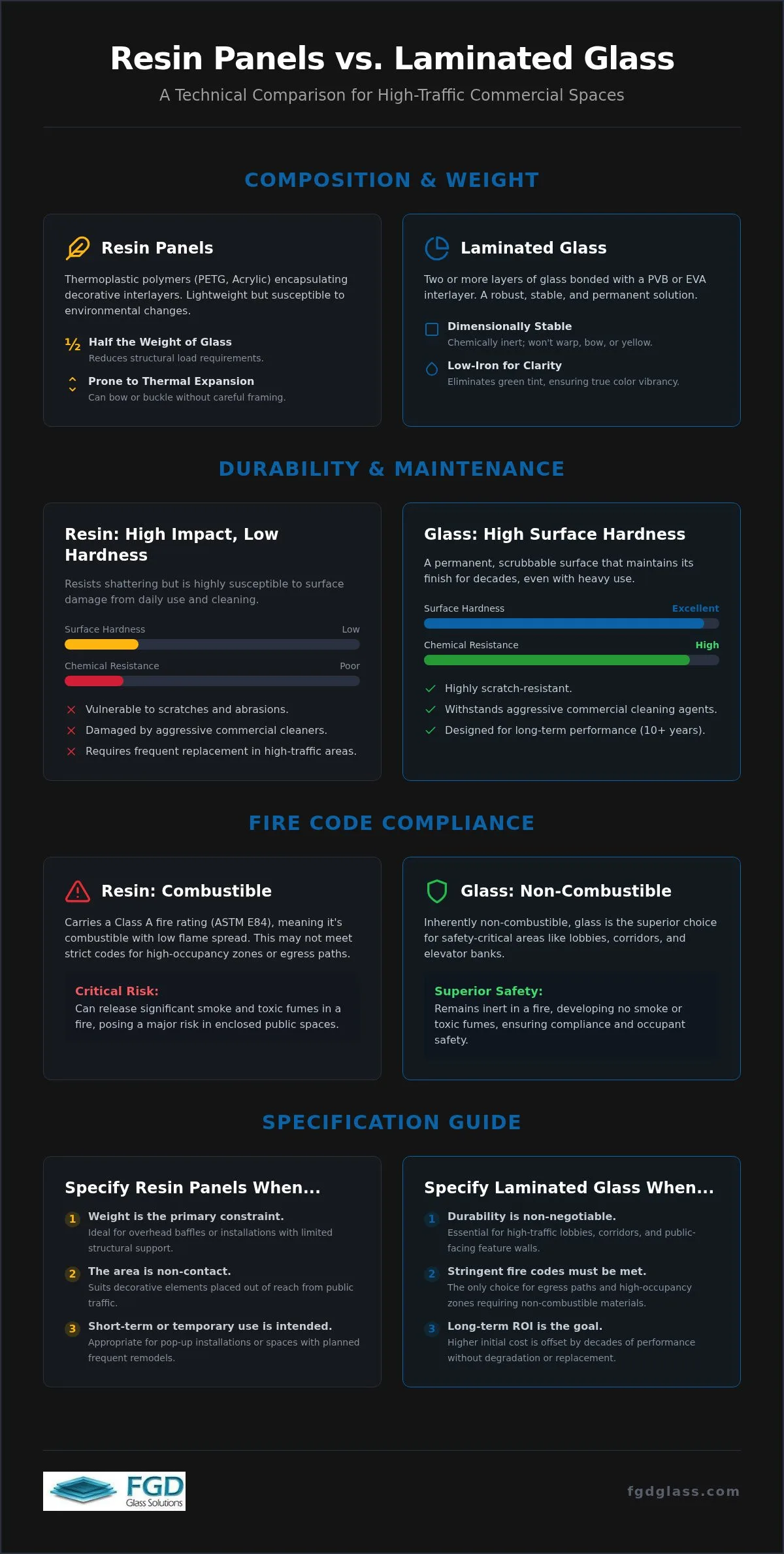
Resin panels are essentially thermoplastic polymers, typically composed of PETG (Polyethylene Terephthalate Glycol), Acrylic, or Polycarbonate. Manufacturers create these panels by encapsulating decorative interlayers, such as organic botanicals or textiles, between two solid sheets using heat and pressure. While this creates a visually striking product that is half the weight of glass, these polymers are inherently softer. They are also prone to thermal expansion, meaning they can expand and contract significantly with temperature changes. This physical characteristic requires careful consideration during the framing and installation phases to prevent bowing or buckling in large-scale installations.
The Anatomy of Modern Laminated Glass
Laminated glass consists of two or more layers of architectural glass permanently bonded together under heat and pressure using a specialized interlayer. This interlayer, often made of Polyvinyl Butyral (PVB) or Ethylene-vinyl Acetate (EVA), acts as an adhesive that holds the glass fragments in place if the panel is impacted. For commercial interiors, we prioritize low-iron glass to eliminate the green tint found in standard clear glass, ensuring that decorative interlayers remain color-neutral and vibrant. It’s a robust solution that simplifies the workflow for contractors by providing a stable, predictable material.
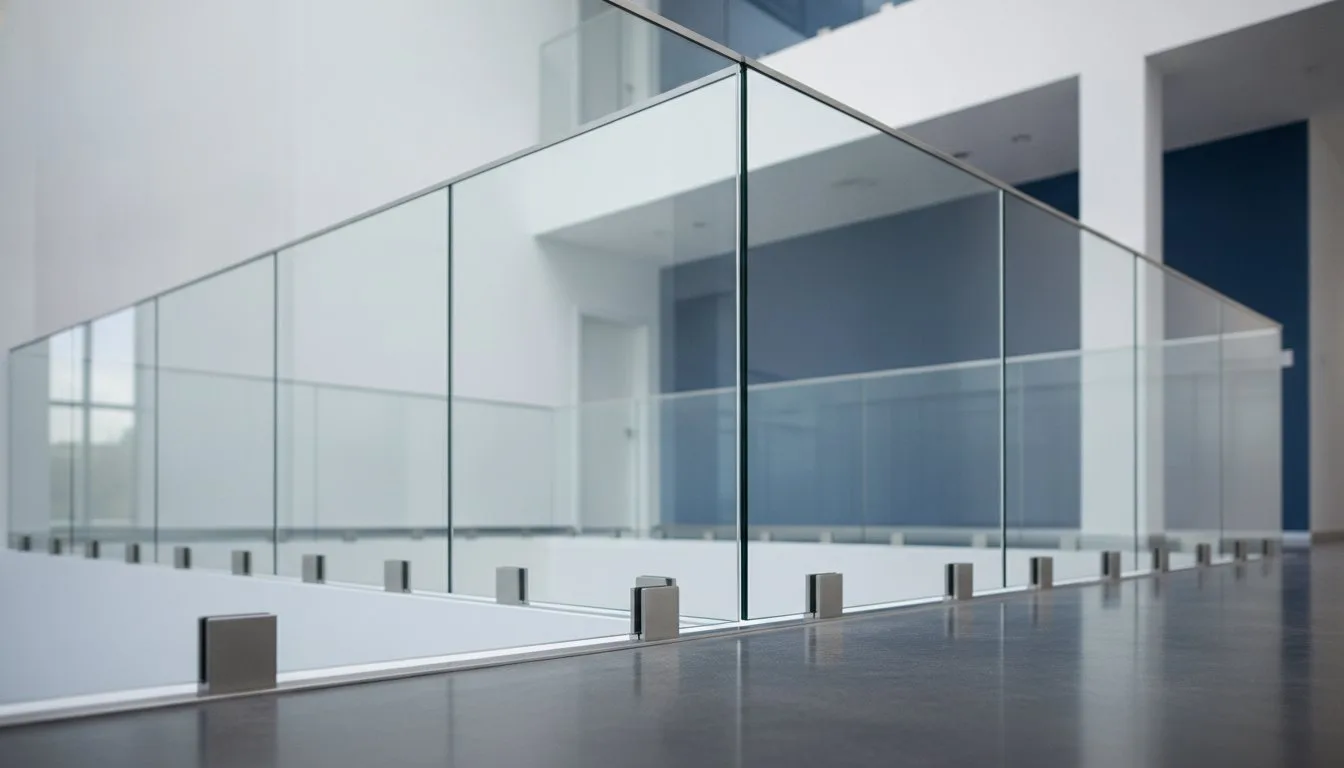
The structural integrity of this material makes it ideal for public-facing features. By specifying decorative glass for architects, firms can leverage advanced technologies like SentryGlas for increased load-bearing capacity. Unlike resin, glass is chemically inert and dimensionally stable, meaning it won’t warp or yellow over time. This stability allows for tighter tolerances in hardware integration and seamless transitions between panels, providing a more polished finish for lobbies and corporate headquarters. The debate between Lumicor resin panels vs laminated glass ultimately comes down to the balance between structural weight and surface durability. While resin excels in overhead baffles where weight is the primary constraint, laminated glass offers the permanence required for the rigorous demands of modern commercial standards.
Performance Comparison: Durability, Safety, and Fire Ratings
Selecting the right material for a high-traffic lobby or feature wall requires a nuanced understanding of how Lumicor resin panels vs laminated glass perform under the physical and regulatory pressures of a commercial environment. While resin panels are frequently marketed for their high impact strength, durability in architecture is not a single metric. A material might resist breaking while simultaneously failing to resist surface degradation or meet stringent fire codes. We prioritize a risk-mitigation approach, ensuring that your specification accounts for the long-term safety and structural requirements of the space.
Fire Code Compliance in 2026
Fire safety regulations for commercial interiors have become increasingly rigorous, particularly in egress paths and elevator lobbies. Most resin panels carry a Class A fire rating based on ASTM E84 testing, which indicates they are combustible but have a low flame spread. Glass is inherently non-combustible. This distinction is critical when evaluating the “smoke developed” index. In the event of a fire, many polymers release significant amounts of smoke and toxic fumes, whereas glass remains inert. For high-occupancy zones, specifying non-combustible materials like architectural glass ensures compliance without the need for additional fire-suppressant coatings or complex variances.
Impact Strength vs. Surface Hardness
The “unbreakable” claim often associated with resin panels refers to their flexibility. Because PETG and Acrylic are relatively soft, they can absorb impact without shattering. This flexibility is a secondary benefit to surface hardness. Glass is a rigid, hard material that resists the micro-scratches caused by luggage, cleaning carts, and public contact. When safety is the primary concern, laminated glass provides a “spiderweb” safety effect. If an impact is severe enough to break the glass, the fragments remain bonded to the interlayer, maintaining the panel’s integrity and preventing injury. Our manufacturing process adheres to the ASTM C1172 standard, providing a certified level of safety that resin cannot technically replicate.
Beyond physical safety, acoustic performance is a major factor in modern spatial design. Glass possesses significantly higher mass than resin, making it a superior barrier for sound transmission. This is particularly valuable when exploring innovative restaurant partition wall ideas, where maintaining a sense of openness while controlling ambient noise is essential. While resin may serve as a decorative skin, glass functions as a high-performance structural element that contributes to the overall environmental quality of the interior. If your project requires a permanent solution that balances acoustic privacy with uncompromising safety, ViviColor Laminated Glass offers the structural reliability that resin panels lack.
Aesthetics and Clarity: The Visual Impact
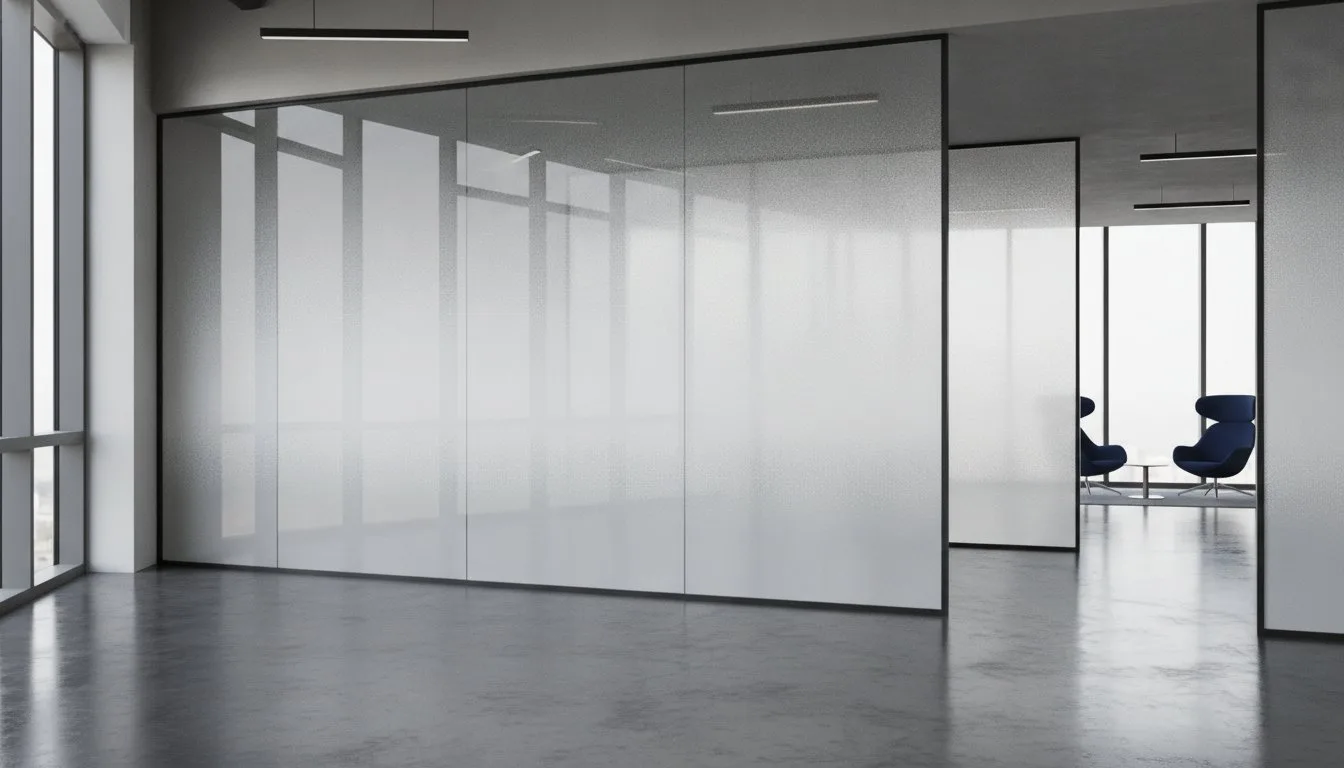
Aesthetics in commercial design extend beyond simple color selection; they encompass the perceived value and authenticity of a space. When analyzing Lumicor resin panels vs laminated glass, the visual difference often manifests in the material’s optical clarity and “hand-feel.” High-end hospitality and corporate brands typically favor real glass because it conveys a sense of permanence and luxury that polymers struggle to replicate. While resin offers a specific “glow” due to its translucent properties, it lacks the crisp, high-definition finish that architectural glass provides, especially in large-scale feature walls where any distortion becomes immediately apparent.
Color Neutrality and Low-Iron Glass
One of the most significant advantages of specifying glass is the ability to achieve perfect color neutrality. Standard clear glass has a natural green tint caused by iron content, which can shift the appearance of encapsulated fabrics or colors. By utilizing low-iron glass, we provide a crystal-clear canvas that ensures your design intent remains accurate. Low-iron glass maintains 91% light transmittance without color shift, providing a neutral medium that doesn’t interfere with the vibrancy of the interlayer. This level of precision is vital for corporate branding where color matching to a specific Pantone shade is non-negotiable. In contrast, many resin panels possess an inherent warm or cool tint that can vary between production batches, complicating the coordination of large-scale installations.
Interlayer Versatility: From Fabrics to Stone
The ability to encapsulate diverse materials allows for bespoke craftsmanship that defines a project’s character. Laminated glass technology has advanced to allow for the integration of delicate textiles and natural stone veneers without the risk of degradation. By specifying laminated couture fabrics, designers can bring the warmth of residential textures into rugged commercial environments. This process protects the fabric from environmental factors while maintaining its three-dimensional depth.
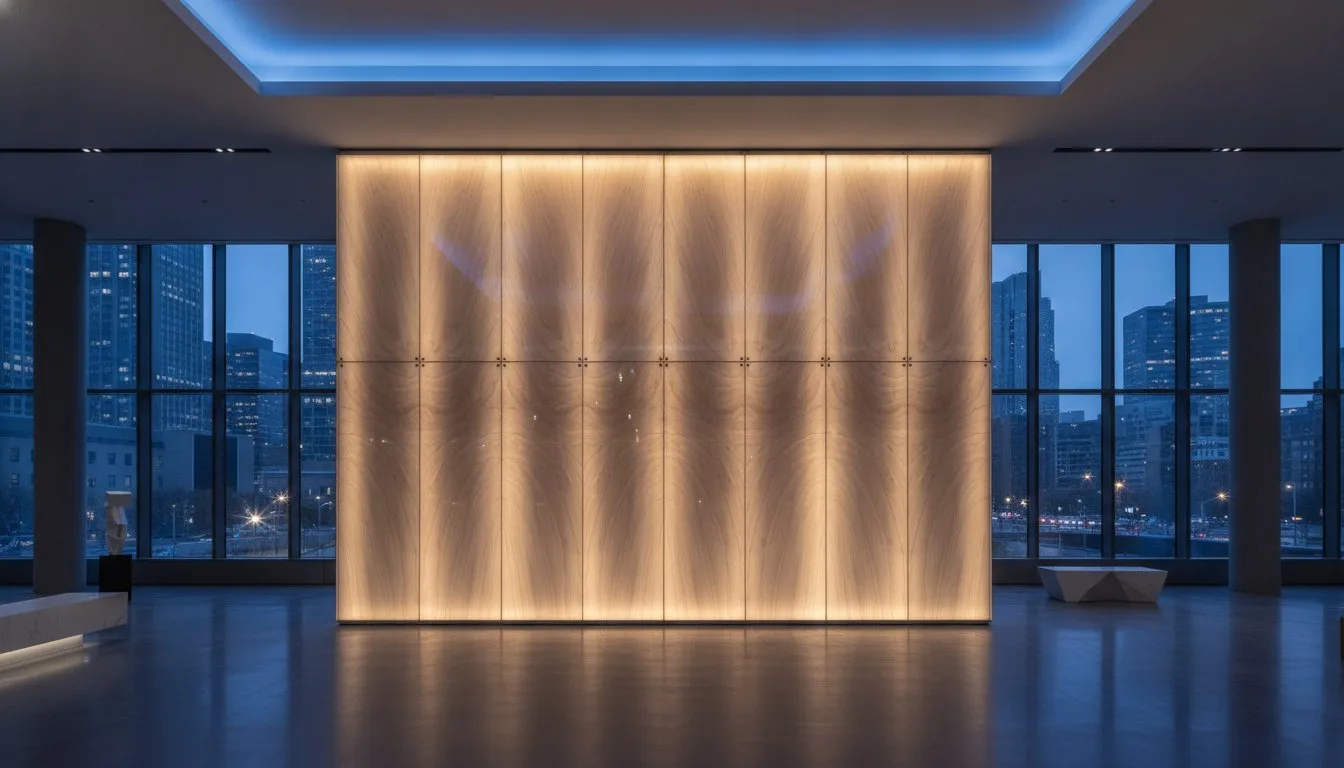
For projects requiring the gravitas of natural stone, VitraStone panels offer a level of realism that translucent resin prints cannot match. These panels use genuine stone interlayers, providing the authentic veining and texture of marble or onyx with the structural benefits of glass. This technology is particularly effective for creating an illuminated stone bar top, where backlighting reveals the complex internal structure of the stone. While resin often relies on printed patterns to simulate these materials, the use of real stone in a laminated glass assembly ensures a sophisticated finish that maintains its aesthetic integrity for decades. Choosing between Lumicor resin panels vs laminated glass ultimately involves deciding between a simulated aesthetic and the uncompromising depth of authentic materials.
Maintenance and Lifecycle: The Hidden Costs of Specification
The true cost of a material specification reveals itself long after the grand opening. When evaluating Lumicor resin panels vs laminated glass, many specifiers focus on the initial purchase price without accounting for the maintenance cycles required to keep the installation looking pristine. In a commercial environment, surfaces are subjected to constant physical contact, aggressive cleaning protocols, and environmental stressors. Choosing a material that resists these factors is essential for protecting the client’s long-term investment and ensuring the design maintains its impact for years to come.
Surface hardness is the most critical factor in maintenance. Architectural glass typically sits between 5.5 and 7 on the Mohs scale of mineral hardness, providing a surface that easily resists the daily friction of luggage, cleaning carts, and public interaction. In contrast, PETG and Acrylic resins are significantly softer, often falling below a 3 on the same scale. This makes them highly susceptible to micro-scratches that dull the surface over time. While glass remains smooth and easy to clean, resin panels can quickly develop a “frosted” appearance in high-traffic touch zones, requiring professional intervention to restore clarity.
The Reality of “Renewable” Resin Surfaces
Manufacturers often describe resin surfaces as “renewable” because they can be buffed or refinished to remove scratches. It’s a capability that sounds beneficial, but the practical impact on a facility’s operations is significant. Refinishing resin involves specialized labor, dust containment, and site downtime. In many cases, repeated buffing leads to a cloudy or hazy finish that permanently compromises the original design intent. Glass is entirely “scrubbable,” allowing healthcare and hospitality staff to use hospital-grade disinfectants without risking chemical etching or surface clouding. This durability is coupled with superior sustainability; glass is a 100% recyclable material that doesn’t contribute to the lifecycle waste associated with short-lived polymer panels.
UV Exposure and Color Fading
Making the Final Selection: When to Specify Each
Finalizing a material specification requires a precise alignment between your design intent and the logistical realities of the commercial environment. We recognize that the choice between Lumicor resin panels vs laminated glass is a pivotal decision that impacts the long-term viability of high-occupancy projects. While resin offers specific advantages in weight-sensitive applications, architectural glass remains the definitive standard for durability, safety, and aesthetic permanence. Our role as a strategic ally is to help you navigate these technical trade-offs to ensure your vision is realized without the risk of premature material failure.
Application Matrix for 2026 Projects
In the current design landscape, the application dictates the material. For wall cladding in high-traffic corridors, elevator lobbies, and reception areas, laminated glass is the superior choice. Its surface hardness resists the daily friction of public contact, and its non-combustible nature ensures immediate compliance with modern fire codes. When evaluating Lumicor resin panels vs laminated glass for these zones, the “scrubbability” of glass allows facility managers to maintain hygiene standards without risking the clouding or chemical etching common with polymers.
Partnering with FGD Glass Solutions
As a seasoned veteran in architectural glass manufacturing, FGD Glass Solutions provides end-to-end involvement that bridges the gap between high-level design and logistical execution. We offer custom fabrication capabilities for ViviColor and VitraStone panels, allowing you to integrate genuine stone veneers and bespoke textiles into a permanent, high-performance assembly. Our team acts as a collaborative partner, providing the technical oversight needed to prevent common industry headaches and ensure a smooth transition from initial concept to final result. We prioritize risk mitigation by adhering to the highest safety standards, giving you the confidence that your project will maintain its aesthetic integrity for a decade or more. If you’re ready to evaluate the clarity and durability of our materials for your next project, contact our team for a custom glass sample to see the quality firsthand.
Securing the Long-Term Vision for Your Next Project
Choosing between Lumicor resin panels vs laminated glass requires a strategic look at the project’s lifecycle. While resin provides a lightweight solution for complex ceiling geometries, high-traffic commercial zones demand the surface hardness and non-combustible safety of architectural glass. By prioritizing materials that resist micro-scratches and UV degradation, you ensure the aesthetic remains as striking in year ten as it was on opening day. This foresight protects the client’s investment and upholds the integrity of your design.
Our team brings over 30 years of architectural glass expertise to your design process. We specialize in custom color matching with ViviColor and provide durable, high-traffic solutions tailored for the rigors of luxury hospitality. This collaborative approach mitigates the risks of material failure and guarantees a result that meets both aesthetic and structural requirements. We’re here to act as your strategic ally from initial specification to final delivery.
Request a custom laminated glass sample for your next project. We look forward to partnering with you to turn your ambitious design concepts into permanent, high-performance realities.
Frequently Asked Questions
Are Lumicor resin panels cheaper than laminated glass?
Initial material costs for resin are often lower, but the total cost of ownership typically favors glass. Glass doesn’t require the professional buffing or frequent replacement cycles that resin panels need after several years of commercial wear. When you calculate the ROI over a ten-year period, the durability of glass makes it the more cost-effective choice for high-traffic environments.
Do resin panels scratch more easily than architectural glass?
Resin panels are substantially more prone to scratching because they are thermoplastic polymers. While glass is a rigid material that resists daily friction from luggage and cleaning equipment, resin is soft enough to be damaged by standard public contact. This surface sensitivity often leads to a dull, hazy appearance in touch zones that requires specialized labor to restore.
Can I use laminated glass for curved wall applications?
Laminated glass is a viable option for curved wall applications. Through a custom bending process, panels can be fabricated to match specific radii while maintaining the structural integrity and safety standards of flat architectural glass. This allows you to maintain a consistent aesthetic and level of durability across both flat and curved surfaces in a lobby or corridor.
Is laminated glass fire-rated for commercial elevator interiors?
Laminated glass is ideal for elevator interiors because it is inherently non-combustible. When comparing Lumicor resin panels vs laminated glass for these zones, glass provides superior fire safety without the risk of toxic smoke emission during a fire event. It meets the most stringent fire codes for high-occupancy buildings without the need for additional fire-retardant additives.
How do I clean decorative laminated glass without damaging the interlayer?
You can maintain decorative glass using standard, non-abrasive commercial cleaners. Since the interlayer is hermetically sealed between glass layers, you don’t have to worry about cleaning agents delaminating or discoloring the encapsulated design. This “scrubbability” is a primary reason healthcare and hospitality facilities prefer glass over softer, chemically sensitive resins.
What is the weight difference between 1/4″ resin and 1/4″ glass?
Glass weighs approximately twice as much as resin. For 1/4″ thickness, glass weighs about 3.27 pounds per square foot, whereas resin weighs roughly 1.56 pounds. This is a critical factor when evaluating Lumicor resin panels vs laminated glass for weight-restricted installations like lightweight ceiling baffles or non-structural decorative overlays.
Does resin yellow over time when exposed to sunlight?
Resin is prone to yellowing and becoming brittle when exposed to ultraviolet light. Architectural glass is inherently UV stable, ensuring that your feature wall maintains its original color and clarity for the life of the building. This stability is essential for lobby applications where panels are frequently subjected to direct sunlight from large windows or skylights.
Can I match corporate brand colors in laminated glass?
You can match corporate brand colors with high precision using ViviColor Colored Laminated Glass. By using low-iron glass as the base, we eliminate the green tint that can distort color, providing a perfect match for specific brand identity requirements. This process ensures that your brand’s visual standards are maintained with uncompromising clarity and vibrancy.