A corporate lobby’s visual impact shouldn’t be compromised by a green-tinted reflection or a mismatched brand color that misses your Pantone target by a mile. You understand that specifying materials for high-traffic commercial environments requires more than just an eye for aesthetics; it demands technical foresight to prevent delamination and installation delays. Exploring innovative back painted glass wall cladding ideas allows you to bridge the gap between high-level design and the grit of logistical requirements. This guide leverages our three decades of industry experience to help you navigate the complexities of modern material specification with professional confidence.
We’ll show you how to utilize Decorlite back painted glass to create high-impact, durable, and brand-aligned commercial interiors that meet the rigorous ANSI Z97.1-2026 safety glazing standards. You’ll gain technical confidence in specifying low-iron glass to eliminate color shifting and learn how to manage the complex logistics of large panel installations. This guide provides a definitive list of application ideas, a breakdown of the latest 2026 building code updates, and the path toward a reliable national fabrication partnership that acts as your strategic ally from concept to completion.
Key Takeaways
- Learn why back painted glass is the preferred non-porous and hygienic surface for high-traffic 2026 commercial interiors.
- Understand how to achieve exact corporate color matching by specifying low-iron substrates and Decorlite technology to eliminate standard glass tints.
- Discover high-impact back painted glass wall cladding ideas including monolithic lobby features and integrated wayfinding for healthcare environments.
- Compare the weight, installation speed, and lifecycle costs of architectural glass against traditional materials like VitraStone.
- Learn how to mitigate project risks by partnering with a national fabricator for end-to-end management of large-format panel logistics.
Beyond the Splashback: Redefining Commercial Wall Cladding with Back Painted Glass
Back painted glass is a sophisticated, opaque architectural cladding solution created by applying a permanent color coating to the rear surface of a glass panel. While residential designers often limit this material to kitchen splashbacks, commercial architects are leveraging it as a primary wall surfacing material to define entire environments. In 2026, the demand for seamless, non-porous surfaces has moved from a design preference to a functional requirement, especially in spaces where clinical hygiene and high-end brand identity intersect. Decorlite has emerged as the industry standard for these high-performance applications, providing a level of customization and durability that traditional finishes simply cannot match.
The Evolution of Decorative Glass in Commercial Interiors
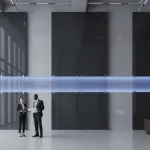
Architectural glass cladding has transitioned from small-scale retail accents to massive, monolithic lobby features that span multiple floors. This shift aligns with a growing industry preference for “clean-tech” materials that prioritize long-term resilience and aesthetic clarity. In high-traffic zones, traditional paint and wallpaper often fail within a few years, requiring costly maintenance and frequent downtime for repairs. Glass outlasts these options by providing a hard-wearing surface that resists scratches, impacts, and fading. When you integrate back painted glass wall cladding ideas into your initial design phase, you’re building a foundation for a space that remains pristine for decades. This evolution reflects a move toward materials that bridge the gap between creative vision and the gritty realities of building management.
The Strategic Benefits of Non-Porous Cladding
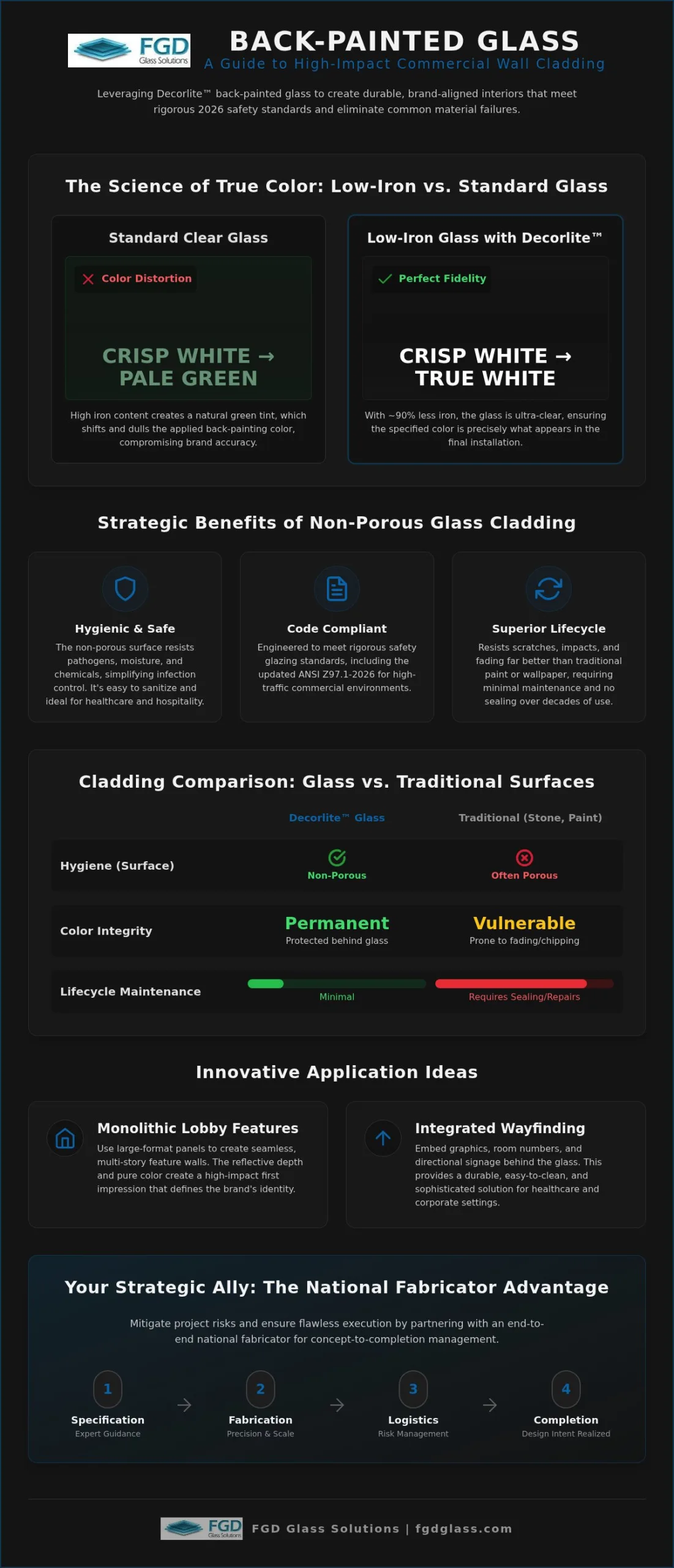
The strategic value of non-porous cladding is most evident in the healthcare and hospitality sectors. These environments demand surfaces that resist chemicals, moisture, and staining while remaining exceptionally easy to sanitize. Glass panels don’t harbor pathogens or allergens like porous stone or fabric panels might, which simplifies infection control protocols and enhances occupant safety. Maintenance requirements are minimal; the surface doesn’t require sealing, stripping, or specialized treatments to retain its original luster. By specifying Decorlite, you ensure that corporate brand colors remain vibrant and accurate, even in the most demanding public spaces. This approach mitigates the risk of material failure and ensures the final physical result aligns perfectly with your initial design intent, providing a turn-key solution that simplifies the entire project lifecycle.
The Science of Color Accuracy: Specifying Decorlite for High-Impact Spaces
Achieving the exact chromatic intent of a commercial project requires more than just selecting a paint chip. Standard clear glass contains high iron levels that naturally impart a distinct green tint. When you apply a light color or a neutral white to the rear surface, this iron-induced tint shifts the perceived color toward a muddy or minty hue. This distortion is why high-performance back painted glass wall cladding ideas always begin with a low-iron substrate. By specifying low-iron glass for your Decorlite panels, you remove the “green filter” and ensure that the color you see on your swatch is exactly what appears on the final installation.
Low-Iron vs. Clear Glass: Why it Matters for Your Palette
Low-iron glass is manufactured with approximately one-tenth of the iron content found in standard architectural glass. This reduction results in a nearly colorless panel with significantly higher light transmission. If you apply a crisp white to clear glass, the result is often a pale green. On low-iron glass, that same white remains bright and true. This technical detail is vital for maintaining project ROI; getting the brand color right during the first fabrication run prevents costly re-orders and delays. For designers looking to create Inspiring Spaces, specifying the right substrate is the primary step in risk mitigation.
Custom Color Matching for Corporate Branding
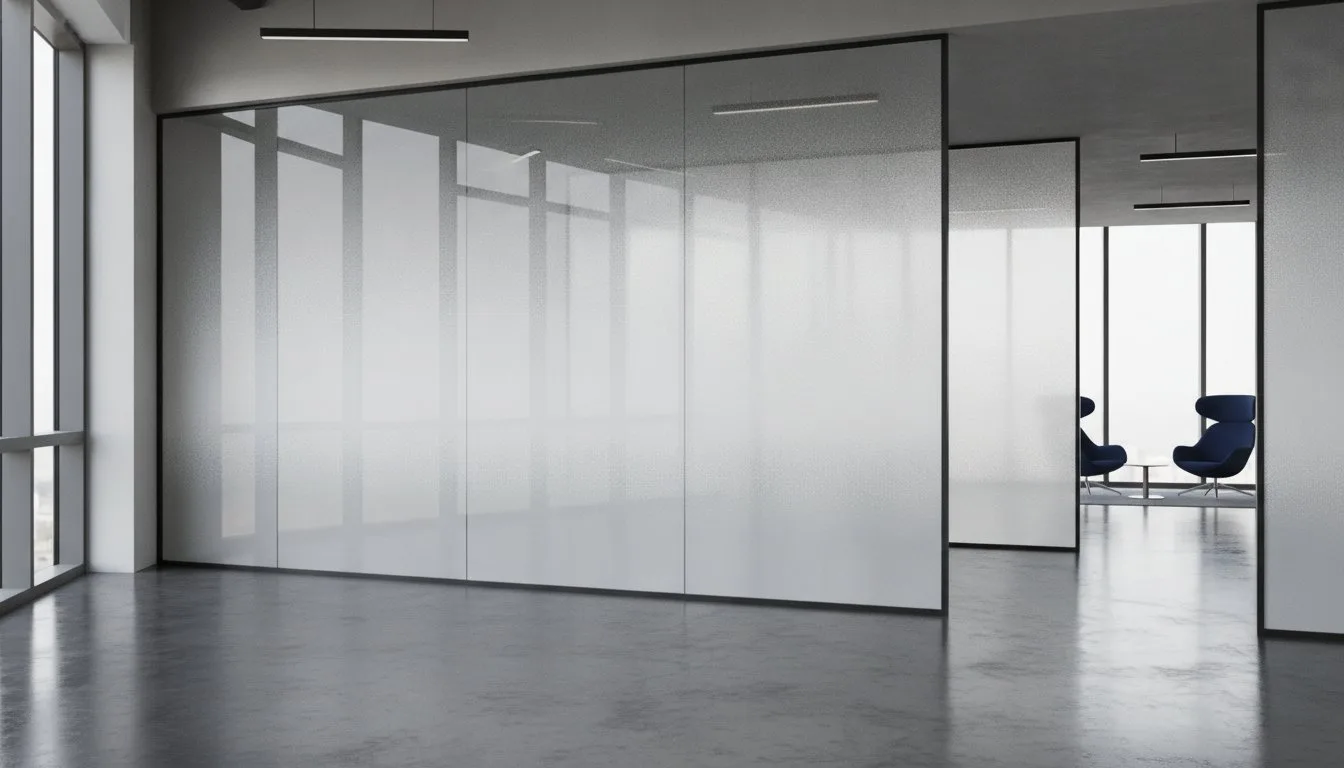
Corporate branding relies on strict adherence to visual standards across multiple locations. The Decorlite process allows for precise matching of Pantone, RAL, or custom Benjamin Moore palettes, ensuring your high-impact spaces reflect the client’s identity without compromise. For projects requiring additional safety or sound dampening, ViviColor Colored Laminated Glass provides a robust alternative while maintaining the same color precision. You can also specify the glass finish to control light reflectance and opacity. High-gloss surfaces maximize depth and light play, while acid-etched matte surfaces offer a soft, sophisticated glow that reduces glare in bright healthcare or office environments.
Batch consistency is paramount for national rollouts. We utilize specialized manufacturing protocols to ensure that a panel fabricated in January matches the one installed in June. If you’re currently developing a corporate palette, it’s helpful to request a custom glass sample to verify the color match under your specific site lighting conditions before final specification.
Comparing Back Painted Glass to Traditional Cladding Materials
When evaluating back painted glass wall cladding ideas, designers often focus on the immediate aesthetic, but the strategic value lies in the lifecycle cost comparison against traditional materials. While high-end stone or industrial paints might seem like standard choices, they often carry hidden long-term costs related to maintenance and structural reinforcement. Glass panels offer a high-performance alternative that balances visual depth with the grounded practicality required for commercial construction. By choosing a material that doesn’t degrade over time, you mitigate the risk of future renovations and ensure the project remains brand-aligned for its entire lifecycle.
Glass vs. Natural Stone and Tile
Natural stone requires significant structural support due to its weight, which often complicates the design of load-bearing walls. Glass cladding provides a substantial weight reduction that simplifies installation logistics without sacrificing the premium feel of a space. One of the most immediate benefits is the elimination of grout lines. In high-traffic or high-moisture environments, grout is a frequent failure point that harbors bacteria and requires aggressive cleaning. Glass panels provide a seamless, non-porous surface that stays pristine with minimal effort. For projects where the organic aesthetic of marble or granite is desired, VitraStone stone glass panels offer the perfect bridge, providing a stone appearance with all the technical advantages of architectural glass.
Glass vs. High-Pressure Laminates (HPL) and Paint
In high-impact zones like elevator cabs and narrow corridors, traditional paint and high-pressure laminates (HPL) are prone to scuffing, chipping, and peeling. Back painted glass is exceptionally scratch-resistant and doesn’t show the wear and tear typical of flat-surface laminates. The visual “depth” of glass creates a sense of luxury and light management that paint simply cannot replicate. From a safety and compliance standpoint, architectural glass is a superior choice for commercial occupancy. It meets rigorous glass and glazing standards for fire ratings and impact resistance, ensuring your project adheres to the latest 2026 building codes.
Environmental impact is another critical factor in modern material specification. Glass is a VOC-free material that doesn’t off-gas, contributing to better indoor air quality in office and healthcare settings. It’s also fully recyclable at the end of its use, aligning with corporate sustainability goals. When you consider the durability in humid environments, glass outlasts almost every other cladding option, as it won’t warp, swell, or delaminate when exposed to moisture. This resilience makes it a reliable partner for designers who need a turn-key solution that performs as well as it looks.
5 Innovative Design Ideas for Back Painted Glass Wall Cladding
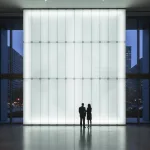
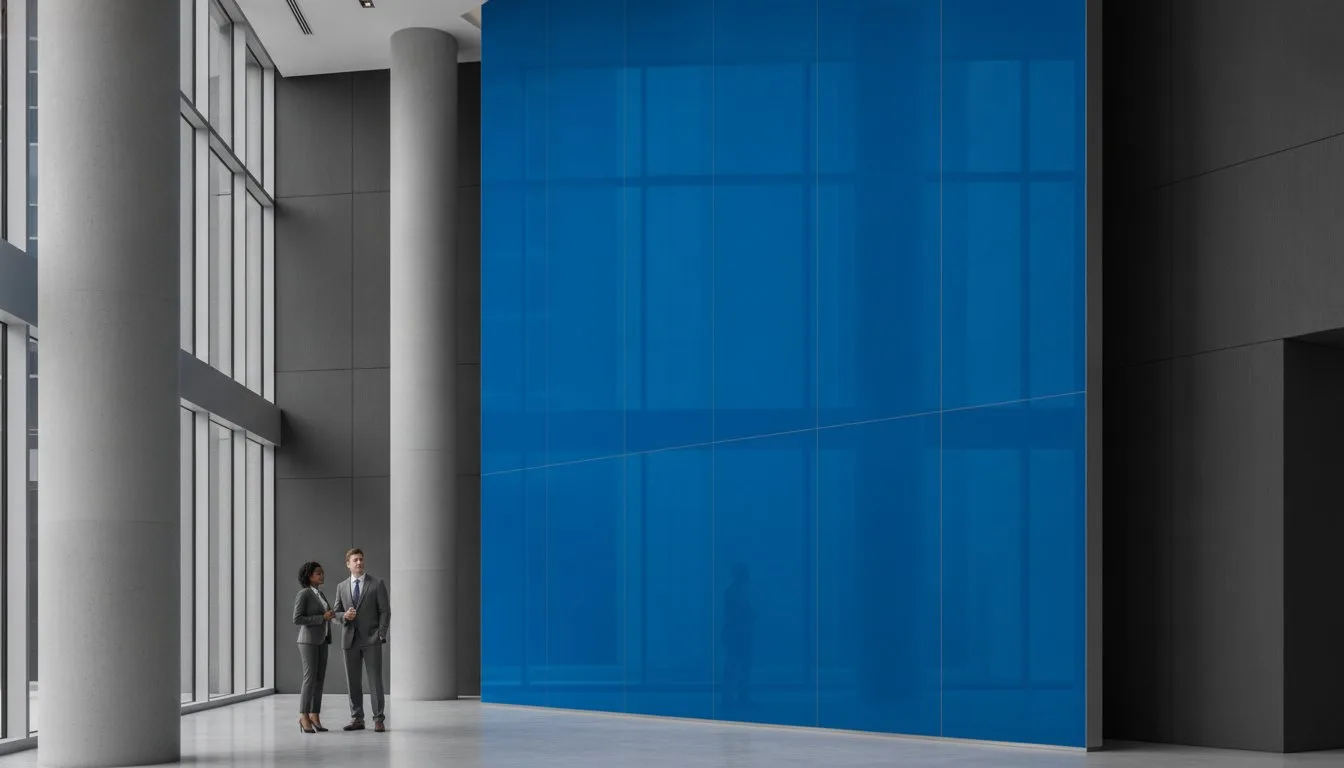
Transitioning from material science to practical application, back painted glass wall cladding ideas transform mundane structural elements into dynamic architectural statements. Designers are no longer limited to small-scale accents; they are using oversized Decorlite panels to create monolithic lobby features that minimize visible joints. This approach offers a seamless aesthetic that traditional stone often struggles to achieve due to natural veining and tile size limitations. In healthcare corridors, integrated wayfinding uses specific corporate brand colors to guide patients while maintaining a clinical, non-porous environment that stands up to heavy traffic and rigorous cleaning protocols.
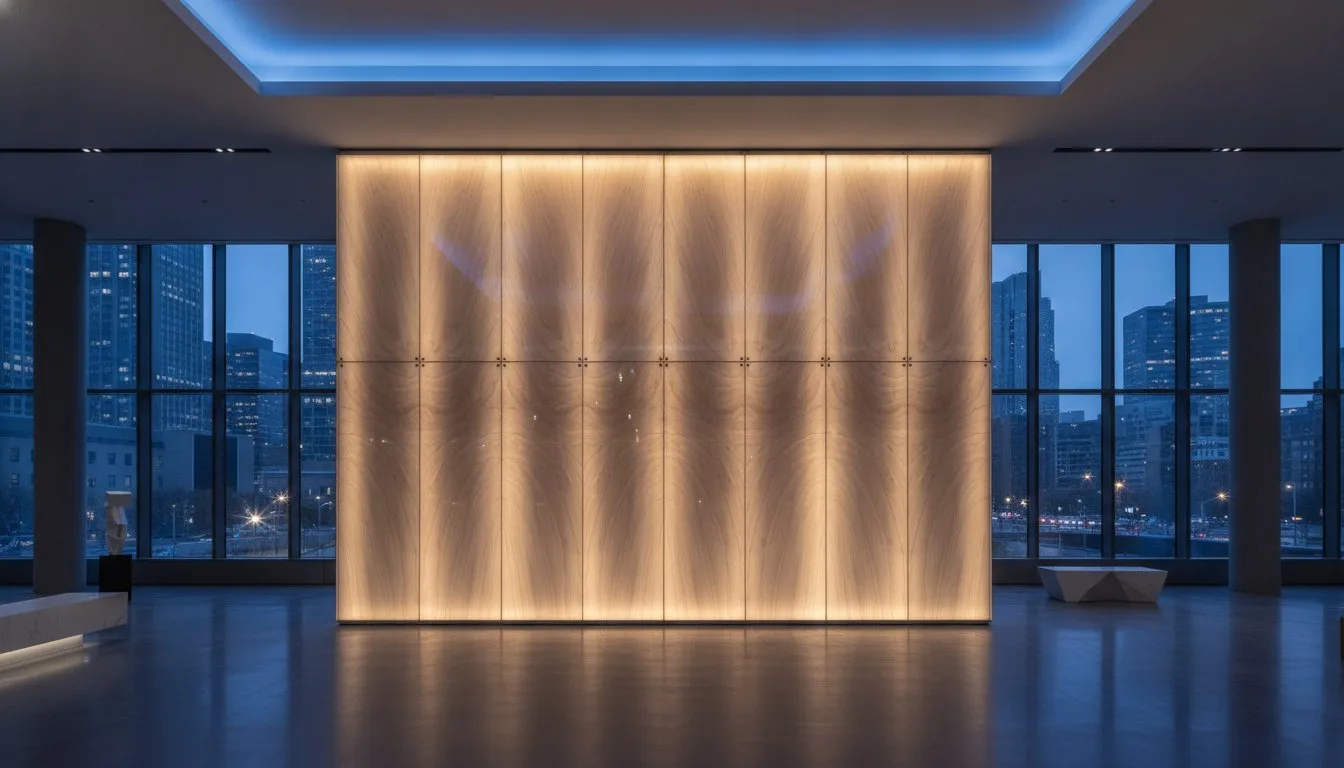
Creating depth in hospitality spaces often involves the strategic use of light. By integrating LumaWall illuminated glass into your design, you can turn static surfaces into active light sources. This technology is particularly effective for illuminated wall panels for bars, where the glass acts as a diffuser to eliminate LED “hot spots” and create a soft, sophisticated glow. Designing for the 24-hour cycle in these environments requires materials that can shift in mood from morning clarity to evening ambiance through simple dimming controls. Glass provides the perfect medium for this light management.
Functional Surfaces: Glass Marker Boards and Magnetic Walls
Modern corporate boardrooms are moving away from standalone whiteboards in favor of functional wall surfaces. Back painted glass cladding can be specified as a ghost-free marker board surface, transforming entire structural walls into collaborative workspaces. These surfaces don’t stain or retain residue from dry-erase markers, ensuring a professional appearance even after years of heavy use. You can also integrate magnetic interlayers during the fabrication process. This creates a multi-functional cladding system where designers can pin architectural plans or branding materials directly to the wall using high-strength magnets, combining high-end aesthetics with grounded practicality.
From Concept to Installation: Partnering with a National Fabricator
Executing high-impact back painted glass wall cladding ideas requires more than just a creative vision; it demands a partner who understands the logistical weight of the material. Large-scale commercial projects often face hurdles during the transition from a digital rendering to a physical installation. By engaging a specialized manufacturer early in the process, you mitigate the risk of specification errors that can lead to costly delays. We position ourselves as a strategic ally for architects and contractors, providing the expert oversight necessary to navigate the complexities of modern glass fabrication. Our thirty years of industry experience allow us to foresee potential issues before they reach the job site, ensuring a smooth execution that respects both your timeline and your budget.
Logistics for large-format glass panels require specialized handling that standard shipping companies simply aren’t equipped to provide. We manage the entire delivery process, utilizing custom crating and dedicated transport to ensure your Decorlite panels arrive in pristine condition. This end-to-end involvement simplifies the workflow for general contractors, as it eliminates the need to coordinate between multiple vendors. Our national manufacturing capabilities mean we can support projects across the United States with consistent quality and reliable lead times, regardless of the project’s scale or location.
Specifying Large Format Panels
Specifying oversized glass cladding involves a deep understanding of structural support needs and manufacturing limitations. While monolithic panels create a stunning visual, you must account for the physical constraints of the building’s elevators and entryways during the design phase. We work with you to manage seam placement, ensuring that joints are intentional and don’t detract from the overall aesthetic. Safety remains our primary concern; every panel is fabricated to meet rigorous tempering and lamination standards, including the updated ANSI Z97.1-2026 requirements. This technical foresight ensures that your design is not only beautiful but also fully compliant with the latest safety glazing codes.
The Turn-Key Advantage for Architects and Contractors
A single-source fabricator provides a turn-key advantage that significantly reduces project lead times. By centralizing the color matching, tempering, and back painting processes, we maintain total control over the production schedule. This approach simplifies the sourcing of innovative architectural glass, allowing you to focus on the high-level design while we handle the gritty realities of production. The final result is a seamless bridge between your initial concept and the logistical reality of the built environment. We take pride in being a constant presence throughout the project lifecycle, ensuring that the final physical result aligns perfectly with your original design intent.
Elevating Commercial Design Through Strategic Specification
Designing a high-impact commercial space requires a material that balances aesthetic ambition with long-term durability. Exploring innovative back painted glass wall cladding ideas ensures a high-performance finish that outlasts traditional surfaces like paint or wallpaper. By utilizing Decorlite on low-iron substrates, you eliminate color distortion and achieve the exact chromatic precision your corporate branding demands. This technical foresight, combined with the maintenance advantages over porous materials, makes architectural glass a superior choice for 2026 interiors.
Successful project execution depends on partnering with a fabricator that understands the logistical realities of large-format glass. With over 30 years of architectural glass expertise and national manufacturing capabilities, we act as a strategic ally throughout the project lifecycle. We provide the expert oversight needed to mitigate risks and ensure the final physical result aligns with your original design intent. Our team is ready to assist you in bridging the gap between high-level aesthetics and budgetary requirements.
Take the next step in your material selection process and Request a custom Decorlite sample for your next commercial project. We look forward to realizing your vision together.
Frequently Asked Questions
Is back painted glass durable enough for high-traffic commercial hallways?
Yes, back painted glass is exceptionally durable for high-traffic environments because the panels are typically tempered to meet safety glazing standards. Unlike paint or wallcoverings, glass resists scuffing and impact damage from equipment or heavy pedestrian flow. This durability ensures that your back painted glass wall cladding ideas remain visually pristine for decades without the need for frequent repairs or repainting, providing a long-term ROI for commercial facility managers.
Can back painted glass be customized to match an exact Pantone brand color?
Yes, we provide precision matching for Pantone, RAL, and Benjamin Moore palettes through our specialized Decorlite manufacturing process. To ensure absolute accuracy, we utilize low-iron glass substrates that eliminate the natural green tint of standard glass. This technical foresight allows us to deliver true-to-life color reproduction that aligns perfectly with corporate branding requirements. We recommend reviewing a physical glass sample under site-specific lighting before final specification to confirm the match.
What is the maximum panel size for Decorlite back painted glass?
Maximum panel sizes for Decorlite typically reach up to 72 by 144 inches, though specific dimensions depend on the glass thickness and tempering capabilities. While oversized panels offer a desirable monolithic appearance with fewer seams, you must consider the logistical realities of transport and building access. We collaborate with architects during the design phase to determine the most efficient panel layout that balances your aesthetic vision with the practicalities of installation and structural support.
How is back painted glass wall cladding typically installed?
Installation typically involves high-bond silicone adhesives or mechanical fasteners, depending on the panel size and substrate. For a seamless look, we recommend using neutral-cure silicone designed specifically for back painted glass to prevent delamination or color bleed. In certain commercial applications, J-channels or stand-offs provide additional structural security and allow for easier panel replacement if necessary. We provide detailed shop drawings to ensure the installation team follows the correct sequence for your specific project.
Is back painted glass suitable for wet environments like spas or commercial bathrooms?
Yes, back painted glass is an ideal solution for wet environments because it is completely non-porous and moisture-resistant. Unlike tile or stone, it doesn’t require grout, which eliminates the primary location for mold and bacteria growth in spas and commercial restrooms. The permanent color coating is applied to the rear surface, protecting it from water exposure and chemical cleaners. This resilience ensures the cladding won’t warp or swell, even in high-humidity zones.
Can back painted glass be used for exterior wall cladding?
Back painted glass is primarily engineered for interior applications where the color coating is protected from UV degradation and extreme temperature fluctuations. For exterior surfaces requiring similar aesthetics, we recommend specifying ViviColor Colored Laminated Glass, which utilizes a pigmented interlayer between two glass lites. This configuration provides the necessary UV stability and safety requirements for building envelopes. Always consult with our technical team to ensure the specified material meets the wind-load mandates for your specific region.
How does the cost of back painted glass compare to natural stone panels?
While initial material costs for back painted glass are comparable to high-end stone, the lifecycle costs are often significantly lower. Glass panels are lighter than stone slabs, which reduces structural requirements and simplifies installation logistics. Because glass is non-porous and scratch-resistant, it doesn’t require the sealing or intensive maintenance that natural stone demands. This durability ensures that your back painted glass wall cladding ideas provide a better long-term value by minimizing future renovation and cleaning expenses.
Does back painted glass require special cleaning or maintenance?
No, back painted glass requires very little maintenance compared to traditional wall finishes. You can clean the surface using standard non-abrasive glass cleaners and a soft cloth to maintain its original luster. Because the color is on the rear surface, you don’t have to worry about fading or scratching the pigment during the cleaning process. This ease of maintenance is a primary benefit for facility managers in high-traffic commercial zones where hygiene and appearance are top priorities.