The most ambitious architectural visions often stall at the friction point between glass and light. You’ve likely experienced the coordination gaps that occur when a glass supplier and a lighting contractor operate in silos, often resulting in visible hotspots or maintenance nightmares. It’s a common industry hurdle that compromises both the aesthetic intent and the project timeline. You need a solution that bridges the gap between creative design and the gritty realities of site logistics.
LumaWall solves this by integrating high-end decorative glass with advanced LED technology into a seamless, turn-key environment. In this guide, you’ll discover how this structural-grade cladding system eliminates traditional installation risks while offering unlimited panel options like VitraStone and ViviColor. We’ll examine the technical specifications, including the 50,000-hour LED lifespan and customizable LUX outputs, that make this system a reliable choice for high-traffic commercial spaces. We’ll also preview the end-to-end technical support that ensures your vision remains as functional as it is striking, from the initial concept to the final physical result.
Key Takeaways
- Eliminate project friction by adopting a turn-key approach that integrates high-end glass and LED technology into a single, coordinated system.
- Master the technical relationship between LED color temperatures and glass opacity to ensure consistent light diffusion without visible hotspots.
- Expand your design palette by integrating LumaWall with bespoke options like VitraStone or ViviColor for sophisticated, brand-aligned environments.
- Secure a smooth project lifecycle by prioritizing early-stage coordination, from BIM modeling to essential pre-installation site surveys.
- Transform commercial spaces into immersive experiences using wayfinding features and mood-shifting lighting tailored for hospitality and corporate lobbies.
Table of Contents
- What is LumaWall? Defining the Illuminated Glass Cladding System
- Technical Specifications: Engineering Light and Glass
- Customization Framework: Pairing LumaWall with Decorative Glass
- Specification and Installation: Ensuring a Smooth Project Lifecycle
- Commercial Applications: From Corporate Lobbies to Hospitality
What is LumaWall? Defining the Illuminated Glass Cladding System
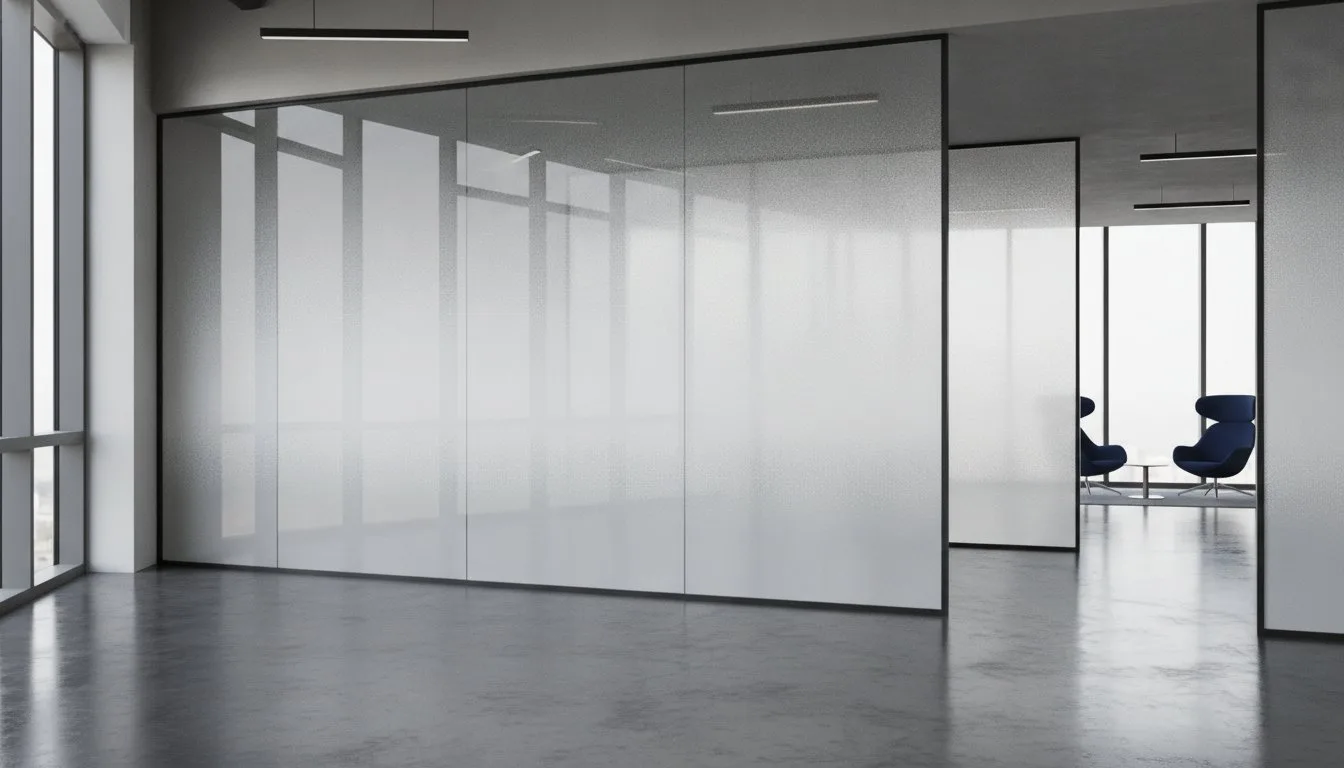
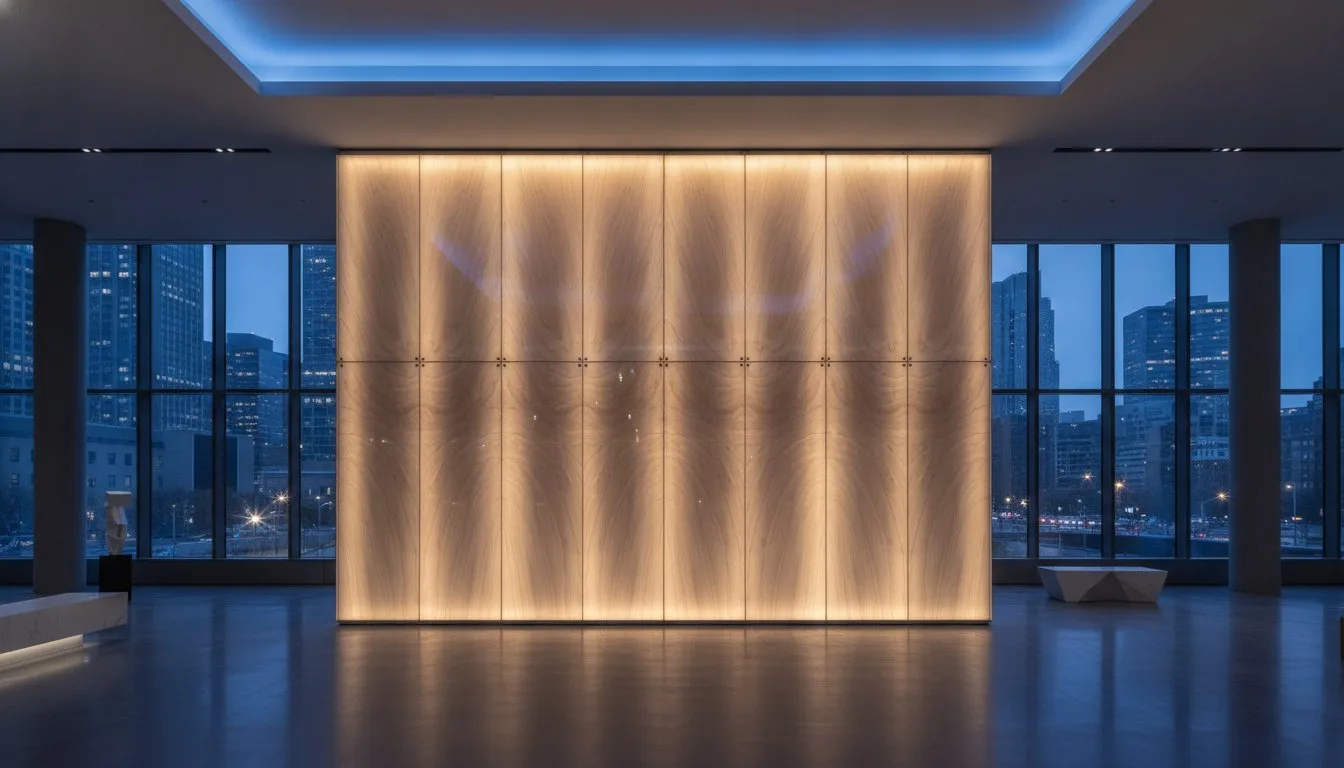
LumaWall represents a significant shift in how interior spaces are illuminated and branded. It isn’t merely a product; it’s a comprehensive interior wall cladding system that fuses high-performance LED technology with premium glass. In commercial environments where visual branding and ambient lighting are critical, traditional methods often fall short. This system moves beyond the limitations of simple backlighting by providing a fully engineered mechanical assembly designed for consistent light distribution. By delivering a turn-key solution, we eliminate the coordination gaps that typically plague projects involving multiple vendors, such as glass fabricators and electrical contractors. This unified approach ensures that the creative vision remains intact from the first drawing to the final installation.
The Core Components of the LumaWall Assembly
The system relies on three primary pillars to ensure performance and longevity. First, high-output LED panels are precision-engineered for either edge-lit or back-lit applications, providing the necessary illumination for the design. Second, specialized mounting hardware maintains structural integrity while allowing for the precise alignment of panels. Finally, the assembly features Architectural glass face panels. These are not standard sheets of glass. They are available in diverse textures and finishes, including our VitraStone and ViviColor lines, to achieve specific aesthetic goals. This integration allows the glass to serve as a canvas for light, creating a depth and vibrance that surface-mounted fixtures cannot replicate.
Why Designers Choose Integrated Systems Over DIY Backlighting
Relying on a fragmented approach to backlighting often leads to frustrating results like visible hotspots and uneven shadows. LumaWall utilizes precision light-guiding technology to ensure a perfectly uniform glow across the entire surface. Because the system is engineered as a single unit, it achieves a significantly reduced profile depth compared to traditional, bulky light-box construction. This saves valuable floor space in tight corridors or lobbies. Maintenance is also simplified. Instead of tearing down a wall to fix a light, our accessible panel mounting systems allow for straightforward servicing without compromising the surrounding architecture. We act as a strategic ally, providing a system that balances high-level design aesthetics with the practical realities of site maintenance and longevity.
Choosing an integrated system means you aren’t just buying glass and lights; you’re investing in a predictable outcome. The mechanical precision of the assembly ensures that every panel fits perfectly and every light performs as expected. This reliability is essential for high-stakes commercial construction where delays are costly. By streamlining the workflow, we help you deliver a high-impact environment that remains functional for years to come.
Technical Specifications: Engineering Light and Glass
LumaWall is built on a foundation of mechanical precision. It requires a specific understanding of how light interacts with physical matter. When you specify these systems, you’re managing both the aesthetic glow and the physical constraints of the building’s substrate. For instance, the maximum panel size for the LumaWall system is 60″ x 120″, with a maximum weight of 300 lbs per section. These dimensions dictate the rhythm of your wall cladding and require early coordination with structural engineers to ensure the wall substrate can handle the load. Precision in the early stages prevents costly adjustments during the installation phase.
Thermal management is a critical factor in the longevity of the system. While LEDs are highly efficient, they still generate heat that must be dissipated to maintain their minimum 50,000-hour lifespan. Our aluminum frame assembly acts as a functional heat sink, drawing warmth away from the diodes. This proactive engineering prevents the premature dimming or color shifting often seen in lower-quality DIY light boxes. By controlling the internal temperature, we ensure the system remains a reliable architectural feature for years.
Illumination Control and Dimming Protocols
Reliable performance in commercial settings depends on how well the lighting integrates with existing infrastructure. LumaWall is compatible with standard dimming protocols, including 0-10V and DMX, allowing for precise control over the environment’s mood. Achieving uniform luminance across a large vertical surface requires this level of control. Correlated Color Temperature (CCT) is a numerical value that describes the appearance of the light emitted by a source, determining whether the output looks warm or cool against the glass surface. With a standard white balance of 6000k, the system provides a crisp, daylight-accurate glow that maintains the integrity of your selected glass finishes. Many designers look to these specifications when pursuing building certification programs that reward energy efficiency and occupant wellness.
Glass Thickness and Safety Standards
Safety is non-negotiable in high-traffic commercial zones. We typically specify 0.25″ glass thickness, utilizing tempered or laminated glass to meet International Building Code (IBC) requirements. These standards ensure the cladding remains safe in hazardous locations such as lobbies or near doors. Because these panels can reach substantial weights, our mounting hardware is engineered to secure the glass while providing the necessary clearance for power supply placement and ventilation. If you are currently drafting a project that requires these specific tolerances, you can request a full technical spec sheet to assist with your BIM modeling. We provide the technical oversight needed to bridge the gap between high-level design and practical safety requirements.
Customization Framework: Pairing LumaWall with Decorative Glass
Designing an illuminated environment requires a deep understanding of light transmission and material density. LumaWall provides the structural and electrical backbone for these installations, but the architectural glass face acts as the filter that defines the final aesthetic. We analyze how different glass opacities affect the glow and throw of the LEDs, ensuring that the light behaves exactly as intended. Whether you’re aiming for a sharp, branded graphic or a soft, ambient wash, the choice of glass is the most critical variable in the assembly’s success. By leveraging custom digital printing or etched textures, we help you create depth that standard surface lighting simply cannot achieve.
LumaWall + VitraStone: The Glow of Natural Stone
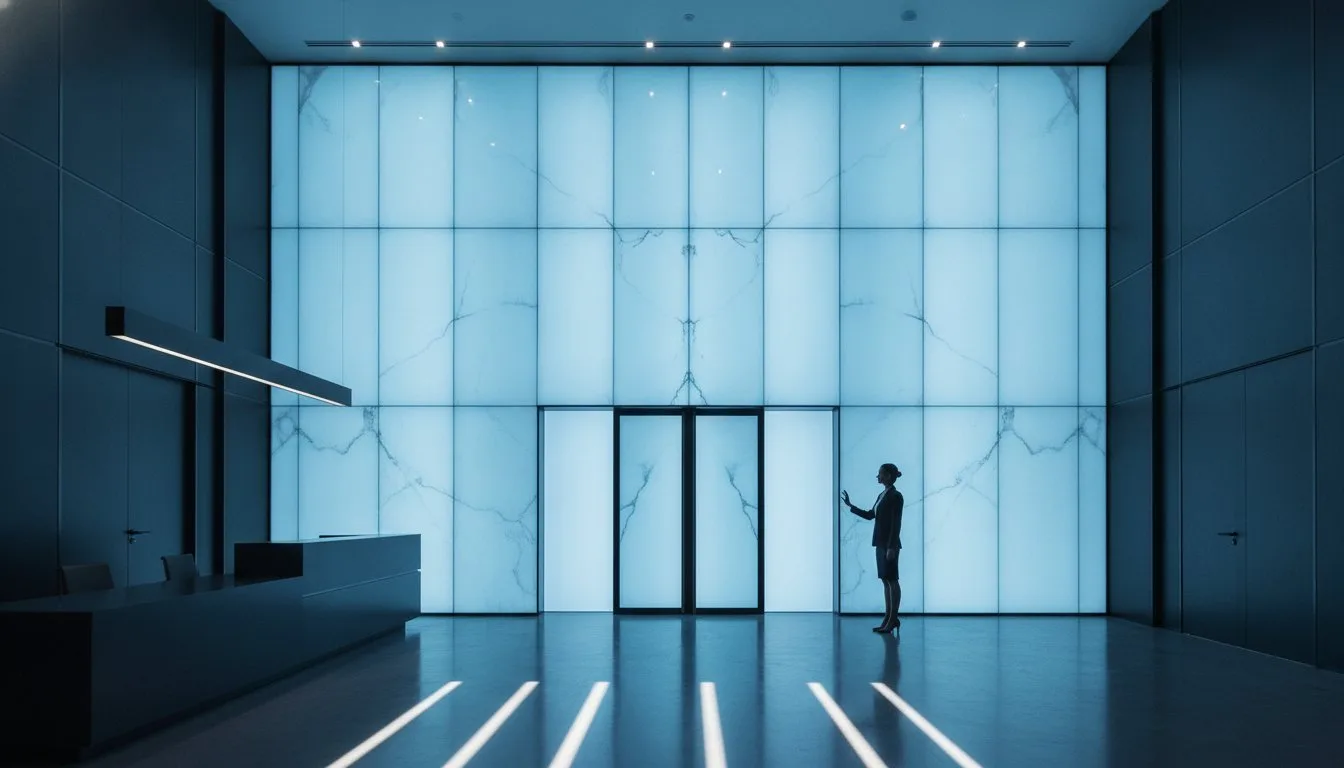
VitraStone panels utilize thin-gauge natural stone laminated to glass, providing the capability to transmit light through materials traditionally considered opaque. This creates the impact of solid backlit marble or onyx while maintaining the structural reliability and ease of maintenance associated with architectural glass. In luxury hospitality environments, this combination is frequently used for concierge desks and feature walls. It offers a high-end aesthetic without the fragility or weight of full-thickness stone slabs, allowing for a seamless integration of natural beauty and modern technology.
ViviColor and Couture Fabric Integrations
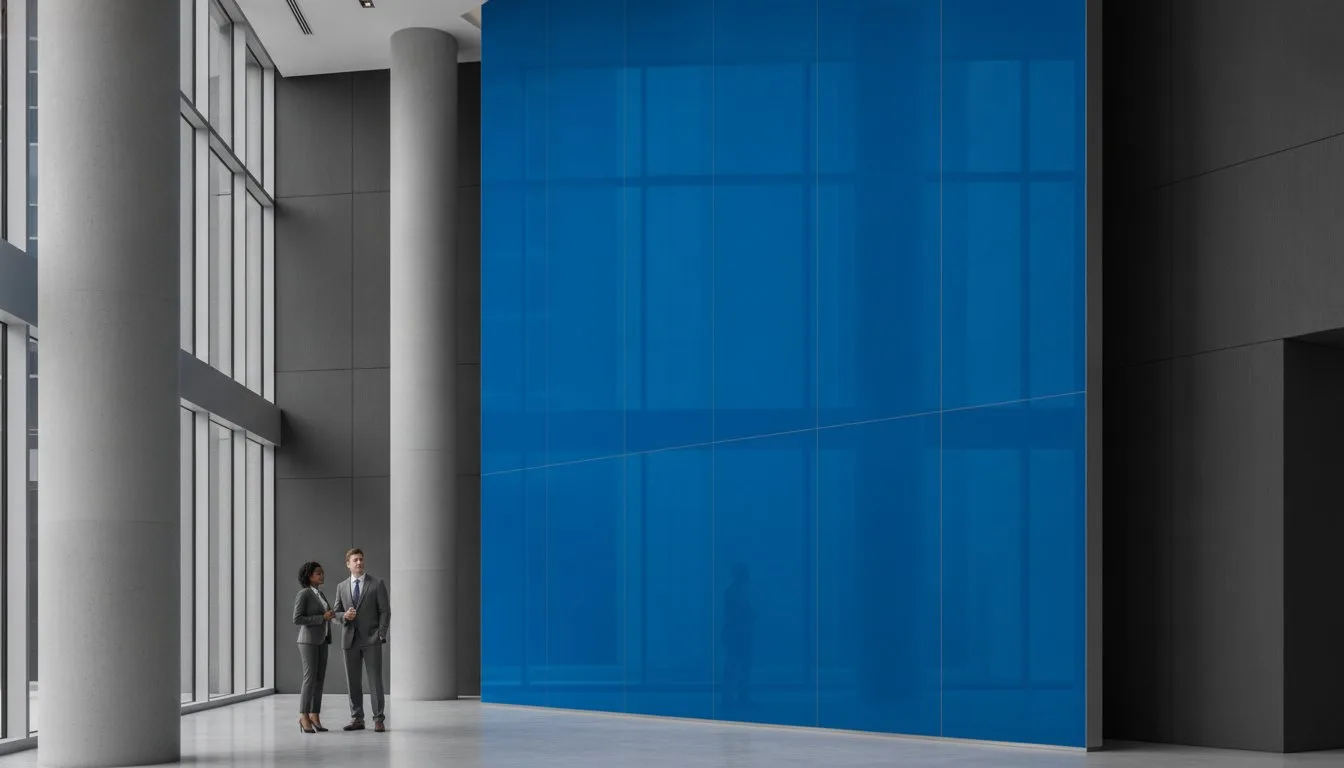
For projects requiring specific chromatic accuracy, ViviColor colored laminated glass allows for the creation of vibrant, saturated light fields. We achieve brand-accurate colors through precision interlayer selection, ensuring that the illumination does not wash out the intended hue. This capability provides a reliable way to maintain brand standards across large-scale installations. If your design requires a more organic feel, Couture Fabric integrations embed textiles directly into the glass assembly. This adds a layer of tactile texture to the illuminated surface, breaking up the light and creating a sophisticated, multi-dimensional effect that adds warmth to modern commercial interiors.
Beyond color and stone, we offer advanced digital printing and etched textures to further customize the light pattern. Precision etching on the glass surface can be used to catch the light at specific angles, creating depth and diffusing patterns that guide the eye across the space. This level of customization allows us to act as a strategic ally, helping you realize complex visions that are both visually striking and technically sound. Designers seeking to complement illuminated glass installations with other heritage-inspired surfaces may also find value in exploring how antique mirror glass can be specified to meet modern safety standards in high-end commercial environments. Our US-based manufacturing ensures that these bespoke requests are handled with the expert oversight required for high-stakes commercial projects.
Specification and Installation: Ensuring a Smooth Project Lifecycle
Success in large-scale commercial construction depends on foresight and the mitigation of logistical risks. When you specify an illuminated wall, the most significant hurdle is often the coordination gap between the glass fabricator and the electrical contractor. LumaWall eliminates this friction by providing a fully integrated mechanical assembly that arrives on-site ready for installation. We act as your strategic ally throughout the project lifecycle, managing the transition from concept to crate with the expert oversight that comes from 30 years of industry experience. This turn-key approach ensures that the structural integrity of the mounting substrate and the placement of power supplies are verified long before the glass arrives.
The 5 Steps of LumaWall Specification
Precision starts at the drawing board. First, we define the visual intent by selecting the glass type, whether it’s the natural translucency of VitraStone or the organic texture of Etama Wood. Second, we determine the lighting requirements, focusing on brightness and dimming protocols. Third, your architectural dimensions are converted into custom shop drawings for approval. Fourth, we verify the site’s electrical requirements and mounting substrate to ensure a perfect fit. Finally, we move to US-based manufacturing, where every component is tested for performance before shipping.
Our standardized mounting systems are designed for more than just the initial installation; they’re built for the entire life of the building. These systems allow for future glass or LED upgrades without requiring a total demolition of the wall assembly. This flexibility is a primary reason why contractors prefer our engineered solutions over fragmented DIY methods. If you’re ready to integrate these systems into your next project, you can schedule a technical consultation with our engineering team to review your specific site requirements.
Addressing the Maintenance Myth
Designers often hesitate to specify illuminated walls due to concerns about LED failure or difficult cleaning protocols. The turn-key design of the system addresses this by allowing for individual panel removal. If a driver needs replacement or an LED panel requires service, the process is straightforward and doesn’t compromise the surrounding architecture. With a minimum LED lifespan of 50,000 hours, these systems offer a low-maintenance solution that remains vibrant for decades. Cleaning is equally simple; the architectural glass face is treated like any other high-end decorative surface, requiring only standard non-abrasive glass cleaners to maintain its clarity and glow.
By streamlining the specification process and providing a reliable maintenance framework, we ensure that your design intent is realized without the typical stresses of complex installations. We bridge the gap between high-level aesthetics and the gritty realities of the job site, providing a finished result that is as practical as it is beautiful.
Commercial Applications: From Corporate Lobbies to Hospitality
LumaWall transforms static commercial surfaces into dynamic, functional elements that define the user experience. In corporate interiors, it serves as a sophisticated tool for wayfinding and brand reinforcement. Large-format illuminated lobby features can be programmed to match specific brand colors, creating an immediate sense of identity for visitors. This isn’t just about aesthetics; it’s about using light to guide people through a professional space with clarity and intent. By integrating light directly into the wall, we remove the clutter of traditional signage and create a cleaner, more modern environment. Designers specifying complete lobby branding systems should also review how LED edgelit signs using architectural glass and precision CNC etching can complement illuminated wall cladding for a cohesive, high-clarity branding solution.
Healthcare settings require a different approach, where the priority shifts toward patient wellness and comfort. We utilize soft, diffused light to create calming environments in waiting areas and treatment rooms. Unlike harsh overhead fixtures that can feel clinical and cold, illuminated wall cladding provides a gentle ambient glow that helps reduce patient stress. Retail environments demand high-impact visuals to capture attention in competitive markets. Flagship stores use our edgelit signage and feature cladding to highlight premium product lines, ensuring the brand remains the focal point of the high-traffic zone.
Impact in High-Traffic Hospitality Zones
Hospitality design relies heavily on creating memorable, “Instagrammable” moments that drive guest engagement and social sharing. Consider a hotel concierge desk that glows 24/7. By using LumaWall, the desk becomes a permanent architectural focal point that remains vibrant regardless of the time of day. Architectural glass also provides exceptional durability in public-facing restaurant backsplashes, allowing the surface to withstand heavy use and frequent cleaning while maintaining its glow. Because the lighting is integrated within the mechanical assembly, there’s no risk of surface-mounted fixtures being damaged in these busy, high-contact environments. Hospitality designers looking to layer additional depth and character into these spaces often pair illuminated cladding with antique mirror panels that balance vintage patina with contemporary safety glass requirements.
The FGD Advantage: Your Strategic Ally in Glass
We act as a strategic ally, offering the foresight needed to prevent common industry headaches and ensure a smooth execution for your project. Our 30 years of experience allow us to anticipate site requirements and provide the technical support your team needs from start to finish. If you’re ready to elevate your next commercial space with a turn-key solution, you can start your LumaWall project with a custom quote from FGD Glass Solutions. We are committed to realizing your most complex visions through precision engineering and expert craftsmanship.
Realizing the Future of Integrated Glass and Light
Specifying illuminated environments shouldn’t be a gamble between mismatched components and fragmented schedules. By choosing an integrated assembly like LumaWall, you’re opting for a system that bridges the gap between creative design and technical execution. We’ve analyzed how pairing this technology with premium lines like VitraStone and ViviColor creates high-impact spaces while the turn-key design mitigates the typical risks of large-scale commercial construction.
With over 30 years of architectural glass expertise and a robust national supply chain backed by US-based manufacturing, we act as a strategic ally throughout your project’s lifecycle. We handle the logistical complexities so you can focus on the aesthetic results. Every detail is handled with precision, from LED thermal management to the structural integrity of the hardware. This comprehensive oversight ensures that your vision remains as functional as it is striking.
Explore the LumaWall Lookbook and Start Your Specification to simplify your workflow and ensure a flawless result. We look forward to partnering with you to bring your most ambitious architectural visions to life.
Frequently Asked Questions
What is the maximum panel size available for LumaWall?
The maximum individual panel size for the LumaWall system is 60 inches by 120 inches. This generous format allows architects to create expansive, seamless surfaces with fewer vertical joints. Each panel can weigh up to 300 lbs, so we recommend early coordination with your project’s structural team to ensure the wall substrate is properly prepared for the load requirements.
Can LumaWall be used with custom graphics or corporate logos?
Yes, we can integrate custom digital printing and corporate logos directly into the architectural glass face. This capability allows businesses to use illuminated walls as high-impact branding features in lobbies or retail flagship stores. Because the graphics are embedded within the glass assembly, the branding remains protected from surface wear while benefiting from perfectly uniform LED backlighting.
Is the LED lighting in LumaWall dimmable?
LumaWall is fully dimmable and compatible with standard commercial lighting control protocols, including 0-10V and DALI. This integration provides designers with precise control over the environment’s luminance and atmosphere. Whether you need high-output task lighting or a soft ambient glow for a hospitality lounge, the system responds accurately to your site’s lighting management infrastructure.
How thick is the total LumaWall assembly from the wall?
The total assembly profile is engineered to be as slim as possible, requiring significantly less depth than traditional site-built light boxes. While the exact thickness depends on the specific mounting hardware and glass type selected, the system is designed to minimize floor space consumption. This reduced profile is particularly beneficial in tight corridors or high-traffic commercial zones where every inch of clearance is critical.
Can I use LumaWall with natural stone glass like VitraStone?
The system is specifically designed for full integration with our VitraStone line of stone glass panels. This combination allows the natural translucency of thin-gauge stone to be highlighted by the internal LED array, creating the appearance of solid backlit marble or onyx. It provides the aesthetic impact of natural stone with the structural reliability and simplified maintenance of an engineered glass system.
What kind of maintenance is required for the LED panels?
Maintenance is minimal thanks to an LED lifespan of at least 50,000 hours and a 5-year manufacturer’s warranty. The turn-key design features an accessible mounting system that allows for individual panel removal if a driver or LED component ever needs service. This foresight prevents common industry headaches by ensuring you don’t have to dismantle the entire wall for routine technical upgrades.
Is LumaWall suitable for damp environments like spas or bathrooms?
Does FGD Glass Solutions provide installation services for LumaWall?
FGD Glass Solutions operates as a strategic ally throughout the project, providing the turn-key system and comprehensive technical support from concept to completion. While we manufacture and supply the full assembly nationally from our US facilities, we coordinate closely with your local glazing and electrical contractors. We provide detailed wiring diagrams and installation instructions to ensure the final result matches your architectural intent perfectly.